Celebrating 100,000 Blog Views with Writers and their Creative Spaces

To celebrate reaching a blogging milestone of over 100,000, I thought I’d share more of what you’ve enjoyed recently. One of my most viewed posts over the past month has been Writers and Their Creative Spaces. So, here are some of the creative spaces of other writers.

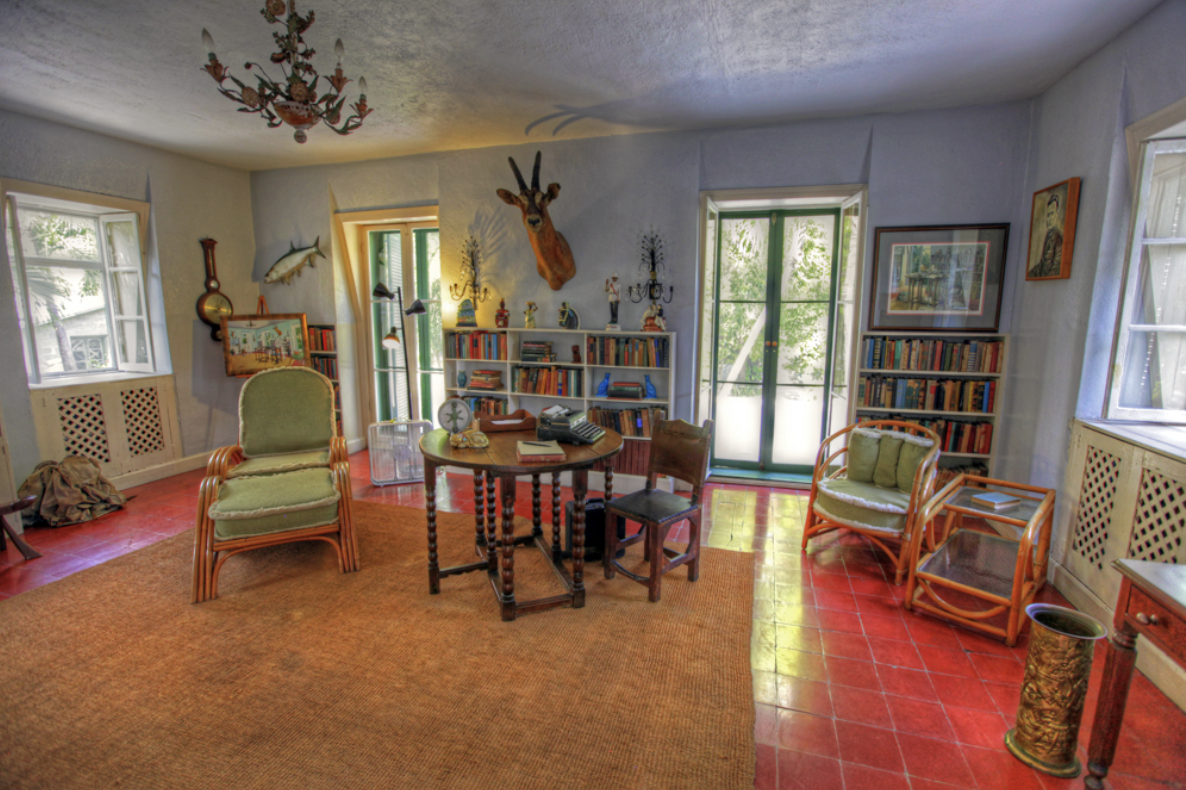
Hemingway’s writing space at his home in Florida Keys. He wrote whilst on his boat or at his Key West home. Here, he wrote The Old Man and the Sea.

In celebration of hitting a blogging milestone of over 100,000 views

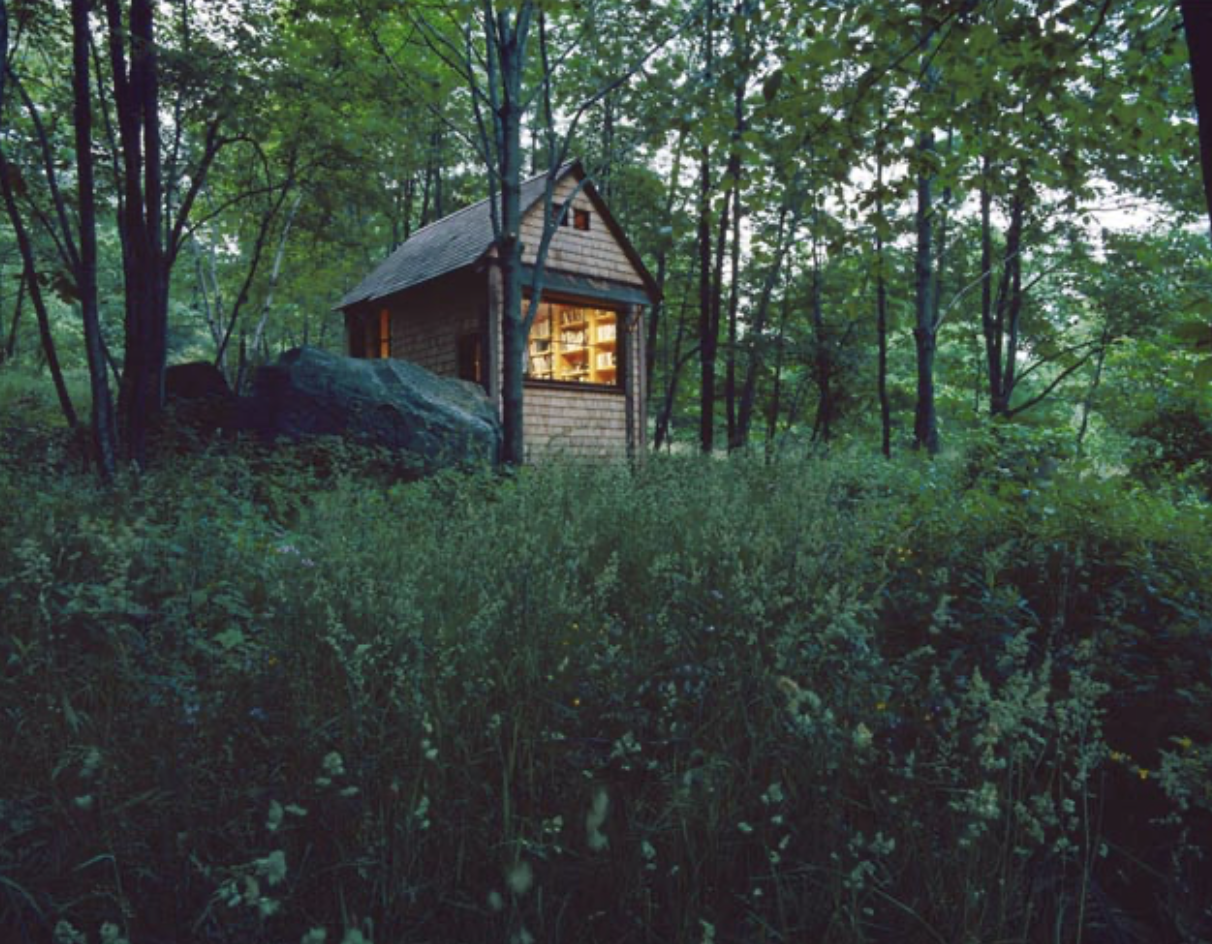
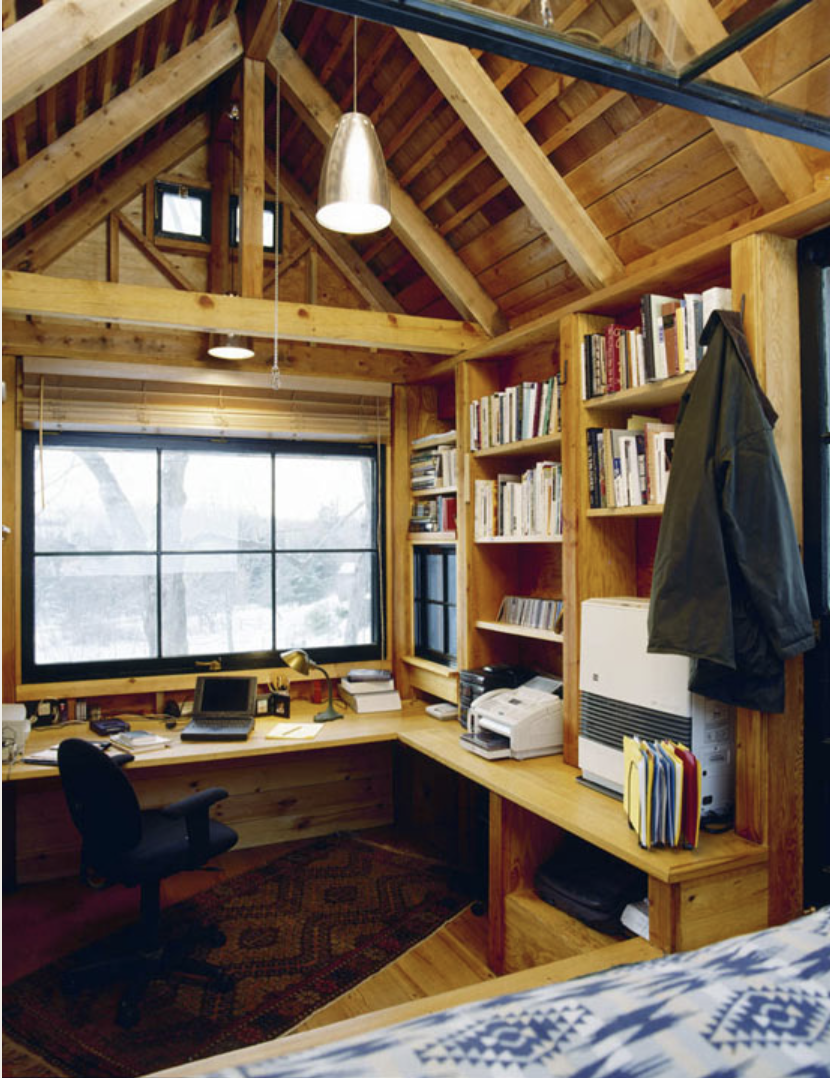
Michael Pollan built this small writing hut in the woods by his house in Connecticut. Pollan was inspired by French writer, Gaston Bachelard, who wrote in The Poetics Of Space, ‘I should say: the house shelters day-dreaming, the house protects the dreamer, the house allows one to dream in peace.’

“The house shelters day-dreaming, the house protects the dreamer, the house allows one to dream in peace.”

Neil Gaiman built a gazebo almost 30 years ago in his garden. He says, “I can look out of the window and some wildlife will occasionally look back…There are heaters down there, because it gets cold here in winter, and blankets on the chairs, ditto, and I have to try and remember not to leave bottles of ink on the table as they freeze. It’s just out of reach of the house Wifi, too, which is a good thing.”

It’s just out of reach of the house Wifi, too, which is a good thing.

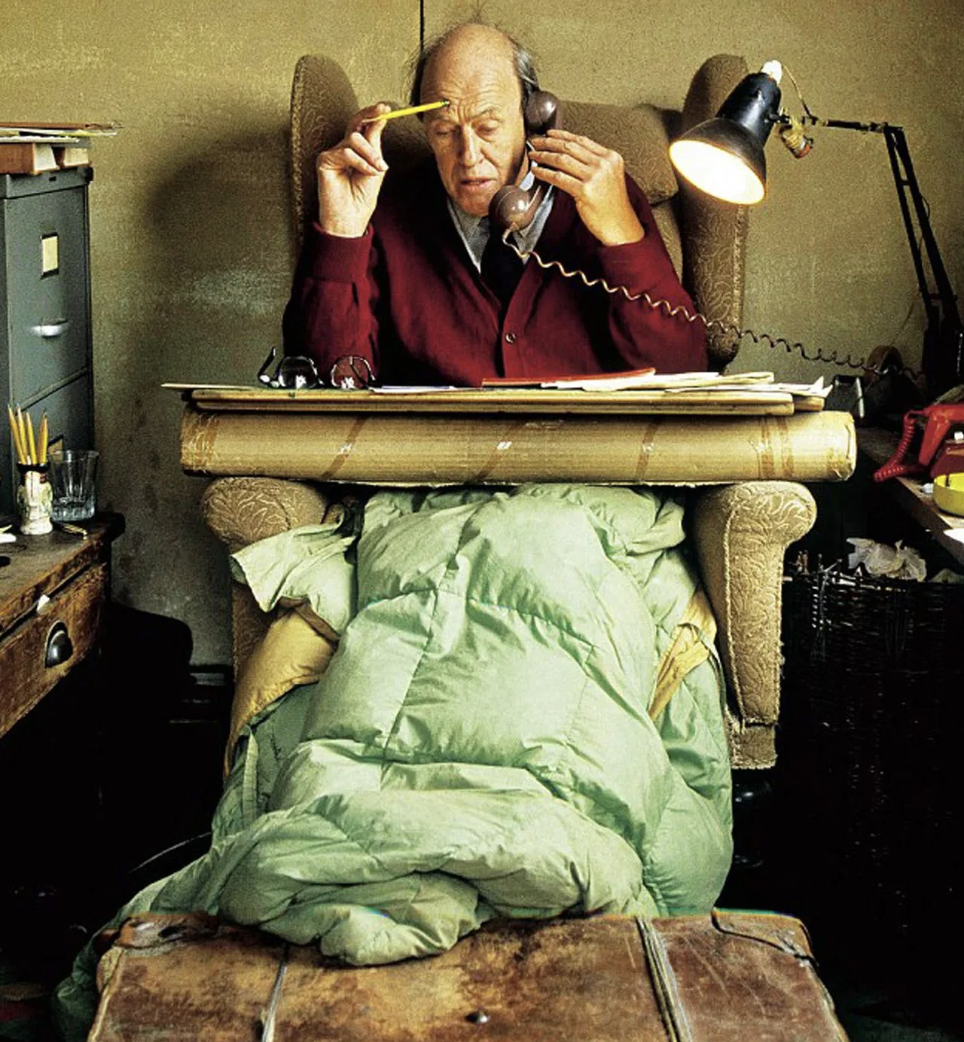
Roald Dahl wrote in a shed in Buckinghamshire, which he called his Gipsy House. Everything was within reach of his chair, according to illustrator, Quentin Blake. He also wrote with his favourite pencils on yellow paper.

Inspired by Dylan Thomas, who found writing at home difficult with young children, Dahl built his Gipsy House – a sanctuary, somewhere where he could work without any interruptions.

A sanctuary, somewhere where he could work without any interruptions.

My Writing Journey: From Novels to Short Stories

Photo credit: Patrick Fore

WordPress sends these milestone reminders, and it’s often a good time to take stock and realise how far you’ve come as a writer. I began writing my debut novel, Take Me to the Castle, in 2007. It was published in 2012 and won The People’s Book Awards in 2013. I began writing short stories with several going on to be published in literary journals. Some won writing competitions and I was inspired by so many other writers and their stories…Alice Munro, Lydia Davis, Hilary Mantel, David Gaffney, Raymond Carver, Franz Kafka, Anton Chekhov, Ernest Hemingway.

It’s been a journey! Eight books (including two novels, two short stories and work in four anthologies) later and I still get a buzz from writing down the first words of a story, a poem, or a novel. I don’t know where the last 12 years have gone, but it’s been quite a journey. Writing, the grit required to keep going and hone your craft, along with the journey to publication, requires motivation and determination. It demands new learning and a level of discipline, but it’s also a lot of fun. The creativity, the process, it’s all part of the draw to write.

I’ve learned that you will always surprise yourself, and others. You’ll never quite know where you are going. This applies even to the most tightly planned plot! You can read more about planning, plot and structure in these posts:

Warning: Structural Work Needed – Plotting Your Novel

Permission To Not Write In A Linear Fashion?

Narrative Arc: Shaping Your Story

What’s Your First Draft Like? Author Interview

I get asked lots of questions on where I find my ideas and how I write. It’s different for poetry, short stories, flash fiction and novels. Novel writing is a marathon, not a sprint, but it also allows you more space for a story to unfold. Short stories and flash fiction, in particular, are less forgiving and no word can be wasted. You need to grab your reader in just a few hundred words, or more, or less!

I love writing. I love it as much now as I did 12 years ago. Blogging has also been a really helpful way of sharing my journey and what I’ve learned. I’ve been able to encourage new writers, connect with readers, network with people, interview authors and be interviewed. Thanks for joining me on the journey, whether you’ve just arrived (welcome!) or if you’ve been here a while. Drop any questions in the comments.

Grief, Loss and Creativity

Dead Poets Society

Yesterday the world lost an incredibly talented comedian and actor. He was a man who saw me through my childhood, teens, twenties and beyond with an equal measure of thought-provoking moments and good humour. But it was no surprise to hear that the star of Dead Poets Society and Goodwill Hunting had also been battling severe depression.

I felt stunned by the news of the death of Robin Williams because he was part of the fabric of my childhood and teenage years, through what I watched and through what those films taught me about life. It was his remarkable ability to bring characters to life that has entertained millions of us through the years. And I believe that comedy and acting quite possibly provided the escape that he needed, an escape from the darkness of his own mind. Depression is a very hidden issue and it is often misunderstood. Scientists have been fascinated by the possibility of a link between depression and creativity for years. In this interesting article on the link between the two, we learn that Norwegian artist, Edvard Munch, wrote the following diary entry: “My fear of life is necessary to me, as is my illness. They are indistinguishable from me, and their destruction would destroy my art.”

Early studies found that creatives often suffered from depression: Charles Dickens, Tennessee Williams, Ernest Hemingway, Graham Greene, Hans Christian Andersen, Leo Tolstoy and Virginia Woolf. Sylvia Plath also sadly took her own life.

Why am I discussing this here? Because I believe that writers have an innate ability to tap into the pain of grief and loss; to take the experiences which they encounter, and to illustrate the difficulties of anxiety and pain. They are able to translate these emotions into the lives of their characters, allowing the reader to tap into their own difficulties and to rise above them.

I often hear people talking about finding solace in books. Some readers say that they find particular books healing. The talent of a creative who is able to paint, act, write or create music lies in their ability to mold their own suffering and angst into a form that is universally understood. Where it might be difficult and overwhelming to face certain situations head on art, books, film and music allow a release of emotions and allow people to reach into the painful aspects of life and engage with issues that can be difficult to discuss.

Writers and artists are often accused of being oversensitive or overly analytical, as though these traits might be weaknesses, but I would argue that this is exactly where their strength lies, and where their empathy and ability to connect with difficult emotions helps them to write a character with flaws, a character who experiences setbacks and difficulties. Interestingly, the body releases natural opiates as a result of the creative process. Harvard Professor, Shelley Carson, says that “creative endeavors are intrinsically rewarding, and you get shots of dopamine in the rewards center of the brain.”

What are your thoughts? Are you a writer with any experience of depression? Do you find find solace in reading or writing?

images (36)

What Can You Learn From Writing Blogs?

images (17)

There are many writing blogs with an array of articles on different aspects of the craft of writing. I read a range of them and have learned a great deal about writing, publishing, editing and much more. The writing blog WRITE TO DONE is searching for the Top 10 Blogs for Writers in 2013.  Edited by Mary Jaksch, Write to Done posts regular articles on writing fiction, copywriting, freelancing, blogging, creativity, and the art of writing. It is an invaluable resource for writers, so if you haven’t yet browsed their pages I would recommend having a look. It will be well worth your time. Their top 10 chosen blogs from previous years have led me to many new and useful blogs.
blog
Those of you who read this blog regularly know that there are a range of author interviews, book reviews, guest posts and writing posts, and despite advice from some bloggers not to blog about writing, they are precisely the posts which receive the highest number of hits on this blog. The difference between a post on writing and a book review, or a post on something less related to fiction is surprising. Many writers obviously read posts about writing, although some prefer not to, and readers are also curious to know about the inside workings of the craft of writing. Give me someone who loves Formula One racing who wouldn’t want to step inside a Ferrari or a Lotus, or a person who loves classical music who wouldn’t want to sit in an orchestra pit and watch the conductor at close range, and the bows of the string section moving in time to the conductor as he sets the tempo for the sound. Are you with me?
download (16) So, now is the time to vote for any writing blogs which have inspired you over the year. Here’s how you can nominate a blog:

How to Nominate Your Favorite Writing Blog:

→ Nominate your favorite blog in the comment section.
→ You have only one vote (only your first will be counted).
→ Please include the web address of the blog.
→ Explain why you think the blog is worthy of winning this year’s award.
To make the cut, a blog must be nominated more than once. Nominations must be received by 12th December, 2013.
The top 10 list will be incredibly helpful for other writers once it is compiled. Here is a brief list of some of the blogs which have inspired me.
http://annerallen.blogspot.co.uk which is written by Anne Allen and Ruth Harris. It is one of Writer’s Digest’s 101 Best Websites for Writers and is full of honestly and humour, and is really informative.
http://writershelpingwriters.net which used to be http://thebookshelfmuse.blogspot.co.uk written by Angela Ackerman and Becca Puglisi.
http://www.jonathanpinnock.com This blog, Jonathan Pinnock’s Write Stuff has a great range of information and thoughts on writing and, again, is very honest. He also covers short stories, which keeps me happy.
http://helpineedapublisher.blogspot.co.uk Written by Nicola Morgan, who has had 90 books published (!) and knows what she’s talking about. She also self-publishes.
http://www.claire-king.com/blog Claire’s advice and insights are to-the-point and given from the perspective of a writer who is rigorous and, again, honest. Do you see a theme emerging here?
Don’t forget to vote for your favourite writing blogs and do add any others in the comments.

The Chemistry Between Writer and Reader

trish

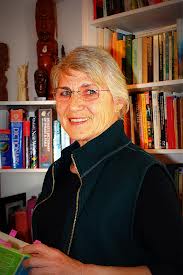
This is a guest post by Trish Nicholson. I first discovered Trish because of her blog posts on writing and the connection between the reader and writer. Her love of travel resonated with me and her approach is unique. Writing has always been an important part of her life, contributing to columns and features in national media, and books on management, and anthropology. Several of her short stories have won prizes in international competitions and been published in anthologies.

Trish is a social anthropologist and a keen photographer who has worked and travelled in over 20 countries, including extensive treks in Nepal, Bhutan and Tibet. She has an MA in Anthropology and an MSc in Rural Development. In 1997 she was awarded a PhD from the University of the Philippines for research on culture and tourism in Mogpog, Marinduque Island. Her work has taken her from the UK and Europe to Vietnam, Austrailia and the Philippines where she researched indigenous communities and worked in the Philippines with Voluntary Service Overseas, and on to Papua New Guinea with the World Bank Development Project.

Now settled in New Zealand and writing full-time, Trish combines her passions for anthropology, stories, travel and photography by writing creative non-fiction, which she describes as: “professional research and experience narrated by a storyteller, whispering in the reader’s ear as they walk beside me.”  Thank you for your post, today, Trish:

Each piece we write is a creative expression from a specific moment and place within us, a unique presence, and I suppose we shouldn’t have favourites but most of us do. While writing Inside Stories for Writers and Readers, the chapter that brought me the most pleasure, and the greatest challenge, was Voice, Language and Dialogue. Although the whole book explores in various ways the relationship between writer and reader, this chapter stretched me to explain how that chemistry works through their distinctive voices.

Voice in literature is a fascinating subject rarely written about in depth, perhaps because it is one of the most elusive concepts in writing technique, so I am happy to accept C. F. Malby’s invitation to share with you how I visualise that relationship.

Everyone has a voice – the expression of who we are, our persona – but it’s not quite as simple as that because we are complex beings. We present ourselves differently to the various people we relate to – spouse, sibling, colleague, local librarian – not only in the things we talk about, but the words we choose and the gestures we use. We have a multiplicity of voices – what I have called a ‘chorus’, a personal ‘madrigal choir’.

Our writer’s voice is expressed most distinctly in the style of writing and the kind of stories we write, but also in the characters we create. We choose which of our voices to use for a particular piece, but for our characters, we have to become sufficiently familiar with them to write consistently in their voices – represented not only in dialogue, but in thoughts, actions and body language because these are all parts of voice.

Developing a character’s voice is a deliberate and careful act for which we draw on our own chorus as well as on our observations and general experience. None the less, both character voice and writer’s voice are partly subconscious and reveal aspects of the author’s persona; a feature picked up by a reader who brings his or her own ‘madrigal choir’ to the relationship and creates an individual interpretation of the story.

Among our friends and acquaintances, even people met for the first time, we recognise that we enjoy listening and talking with some more than with others, and we appreciate them in different ways. We may find what they say more, or less, interesting, but their ‘voice’ as we perceive it, also indicates their attitude towards us. Some people call this personal ‘vibes’. They can influence our thinking and even our feelings about ourselves in a similar way to a story that relates to our own experience.

Perhaps because of the permanency of the written word, this effect seems even stronger in the relationship between a reader and a writer when they meet in a story. Each reader responds emotionally in a different way, both to the author and to the characters, especially when an author allows readers to use their imagination rather than feed them with every detail.

But when I read a novel, I want to identify with the characters, not with the author. This is the crux of what is meant by ‘show don’t tell’. By showing character through all the aspects of character voice – thoughts, dialogue, gestures and actions – a reader can engage with them; if we are told these things directly, the author’s voice predominates and gets in the way.

Whether a work is fiction or non-fiction, readers react to an author, and create their own interpretation of a story, with the voices they bring to the reading. In Inside Stories I discuss this and other aspects of creative writing in greater depth, using short stories as illustrations because the voices are often louder and clearer in the intensity of literary short fiction.

As writers, we choose the voices we use to create a particular story, as readers we complete it through our own voices – and in each cases, it is achieved both consciously and subconsciously. This chemistry between writer and reader arising from prose is at the heart of writing, whatever the genre.

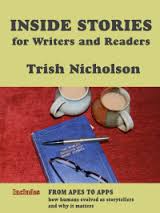
inside storiesInside Stories for Writers and Readers looks at the creative process for readers and writers and offers a unique insight into the different themes of writing and reading novels, short stories, fiction and non fiction.

You can connect with Trish via twitter or her website and find her other books here.