Writer’s Block: 5 Top Tips for Finding Inspiration

#ds139 "Writer's Block"

There are those who say ‘Don’t look for inspiration, just write.’ What about the days when you are stuck with a scene that feels clunky or one of your characters doesn’t seem consistent or exciting enough. Maybe you are are about to embark on a new book, a first book, a short story, or a poem…and the list goes on. Finding ideas for blog posts can sometimes be difficult when many key topics have been covered from all angles.

Here are 5 top tips:

Go for a walk. Get out and stretch your legs. Writing can keep you pinned to a chair for longer than you realise and the exercise alone will get the blood circulating to your brain. Einstein came up with the Theory of Relativity while riding a bike. Emerson said of Thoreau: ‘The length of his walk uniformly made the length of his writing. If shut up in the house, he did not write at all.’ Haruki Murukami runs 10K a day when in writing mode and says, ‘Physical strength is as necessary as artistic sensitivity.’ The Neuroscience of Imagination is a really interesting article on this topic.

See a film. It is a good idea to see films which stretch your imagination, especially if it is a difference genre to your own writing. The visual stimulus and the way the characters are played out often spark ideas for characterisation or scene setting and plot momentum.

Read. Read as much as you can of as many different genres as you can get your hands on. Ian McEwan writes all morning and reads all afternoon. Some agents recommend reading at least as many words as you write each day! With the rise of ereaders it is quick and easy to access a vast range of books.

Pick up a paper if you want to find inspiration from non-fiction.

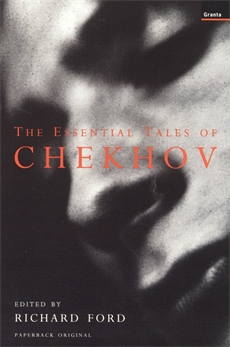
Dip into a short story if you want a short burst of inspiration. They are packed full of description and swift characterisation. See my recent post on short stories.

Head to a cafe. Go somewhere which is guaranteed to be full of people! You are most probably writing about people, so study them. Watch people’s body language, the way they dress, how they talk. Go and write or meet a friend and observe. You’ll be amazed by how much it helps. I was writing a difficult scene in my novel in a cafe. The scene involved a particular character and, by chance, a guy with similar features and mannerisms to my character sat down at a table nearby. Needless to say the scene was wrapped up by the time I had finished my coffee. It was a complete coincidence but you never know who will walk by or sit down and inspire a particular character in your writing.

Go to a gallery. Or a football match, or any thing that you enjoy and find inspiring. I love art galleries and there is something about art which, for me, crosses over into writing and ideas. I see a painting and think of a story behind the image or wonder about the life of the artist. The biographies on the wall often inspire ideas about a different time frame or issue.

So, go and be inspired then come back and tell us what it is that helps you to get around writer’s block. Do you have any tips for inspiration?


Short Stories and Flash Fiction

Having spent months editing Take Me to the Castle I have missed the writing process, which is what writers love. Editors scour written work for grammar, punctuation, style, consistency. Publishers focus on pulling a book together professionally and marketing it to readers. Writers love to craft novels and stories. I think we come unstuck when it is time to take a scalpel to the writing and cut out or change words, re-read, re-write, and change any inconsistencies. So I decided to take action and write some short stories and flash fiction. This has served two purposes – It has given me the opportunity to write in a shorter timescale than I would a whole novel, and it has sharpened my skills as a writer. I will keep you posted on the release of these. My aim is to publish an anthology in the future, with a collection of short stories and poems.

I have had some communication with the lovely Alison Moore, author of The Lighthouse, which was shortlisted for The Man Booker Prize for Fiction. She says that she began her journey into writing by writing short stories, and that it tightened her style and honed her craft. I had already read ‘When the Door Closed, It was Dark’ in The Best British Short Stories 2011 by Salt Publishing, and loved it. So I set to work on short story writing and have also written flash fiction, generally under 350 words. For the writer it teaches you to keep the essence of your story within limited boundaries, and for the reader it is a pleasure to read something which is short and intense – like a good espresso!

Before I get back to my coffee, I just want to leave you with an exclusive short story by Hilary Mantel, The Long QT. It is striking in so many ways. Let me know what you think.

What are your experiences with reading or writing short stories and flash fiction? Do you prefer these styles of writing to novel-length work or vice versa? Have your say and feel free to share any of your own reading or writing experiences with short stories or flash fiction.

Recommendations:

Why do you write?

Eats, Shoots & Leaves

This is a question many people ask authors, and sometimes authors ask themselves the very same question. It is hard to put the answer into words and there are different reasons for each person. What it comes down to for a majority of writers is an incredibly vivid imagination and a passion for words.

Having spent years teaching English to children, I am a grammar and punctuation freak. I often want to take a black felt-tip pen to shop signs and flyers advertising items using really bad grammar. You can probably imagine that I own a copy of Eats, Shoots and Leaves. Well, you’re right – it’s sitting next to Lost in Translation. I also enjoy reading Port Out, Starboard Home: And Other Language Myths. It’s a perfect gift for anyone who loves to know about the idiosyncrasies and origins of words. The author, Michael Quinion, has contributed extensively to the Oxford English Dictionary. He is an English Etymologist who explains the origins of words and phrases. Why are meals square? He published a U.S. version Ballyhoo, Buckaroo and Spuds: Ingenious Tales of Words and Their Origins.

So, back to writing. I often think that writing came out of the blue for me five years ago when I began my first novel, but when I think back to my childhood I remember journals and poetry. I kept diaries and travel journals. I wrote reams of poems and tucked them all way. Then when I studied English A Level I was captivated by the words of an English Professor who taught us about Milton’s ‘Paradise Lost.’ The words jumped off the page and danced – images flittered through my mind and I think it was at that point that I fell in love with language, and with the way that words can be used to create scenes in your imagination.

I think many writers write both because they want to, and because they have to. When you have a story that needs to be written down, it won’t go away. Despite the discipline and determination required to finish, and then to edit your work, and the numerous other factors which draw you away, there is something intangible which keeps you there, writing the story. It’s hard to explain, but for me it is something like the process of colours being applied to a canvas – the artist can see the image before it appears but the colours need to be applied and layered to form texture and an image. It is the same with words, I can see the scene in my mind but the words – dialogue and narrative – have to be applied in layers to form an image that will be imprinted in the mind of another person, the reader.