To celebrate reaching a blogging milestone of over 100,000, I thought I’d share more of what you’ve enjoyed recently. One of my most viewed posts over the past month has been Writers and Their Creative Spaces. So, here are some of the creative spaces of other writers.
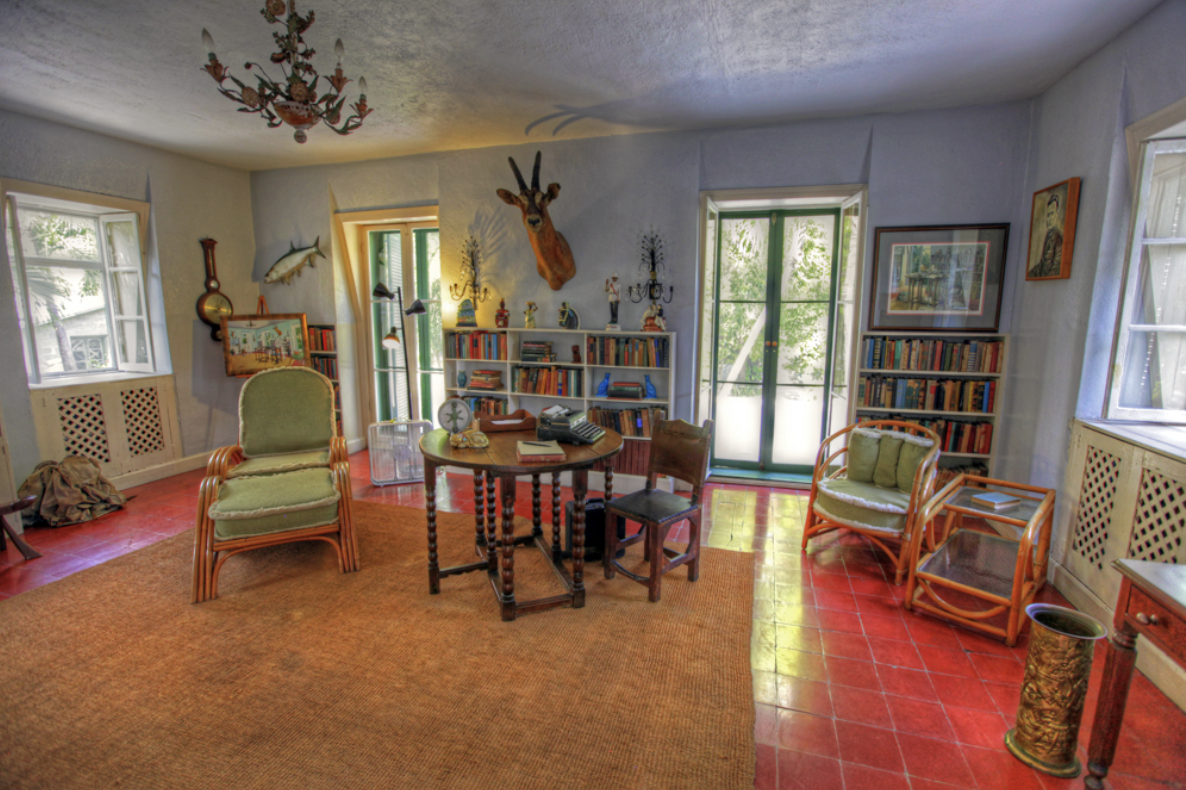
Hemingway’s writing space at his home in Florida Keys. He wrote whilst on his boat or at his Key West home. Here, he wrote The Old Man and the Sea.
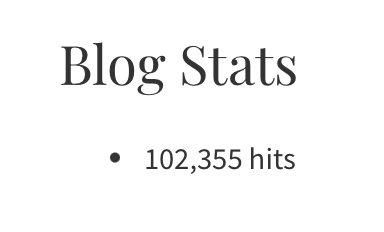
In celebration of hitting a blogging milestone of over 100,000 views
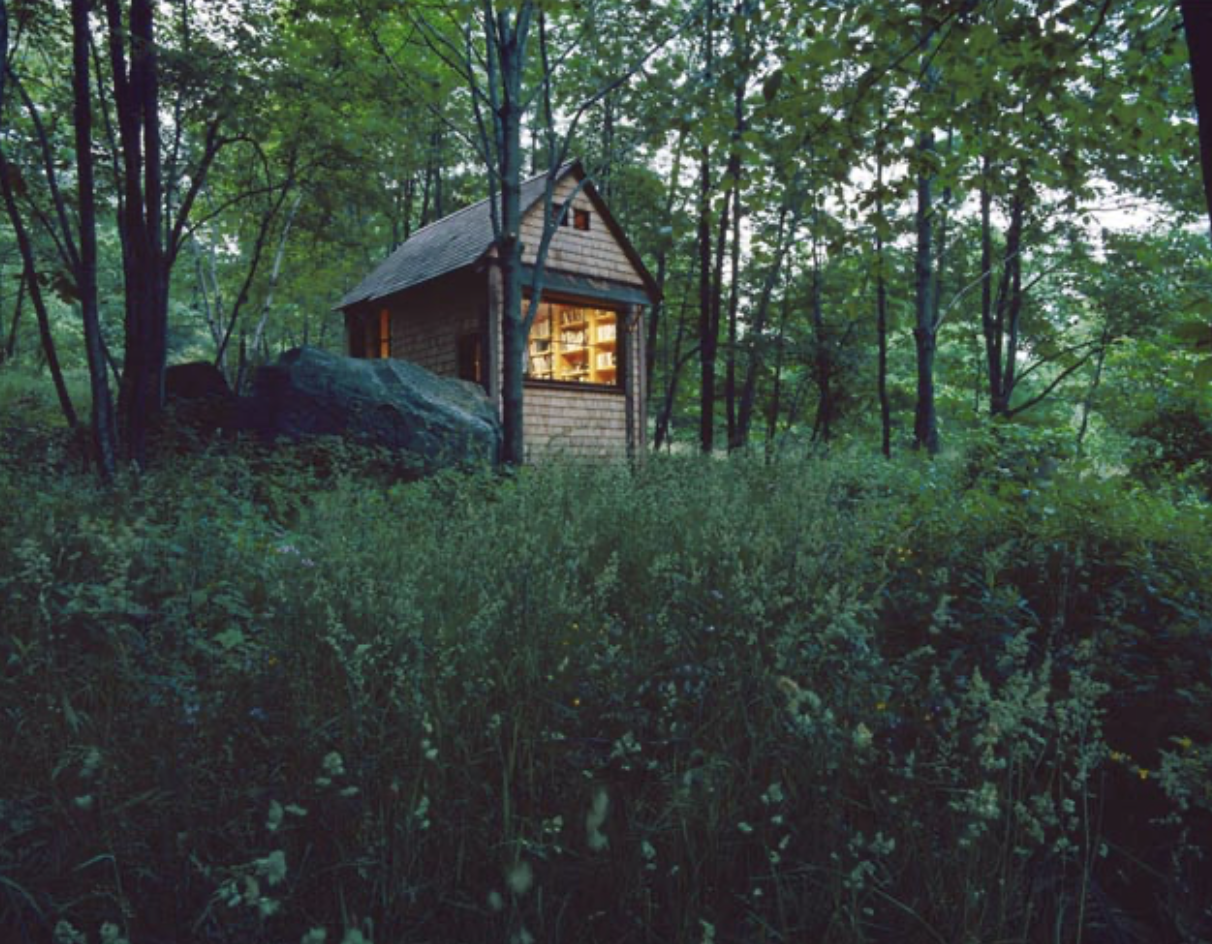
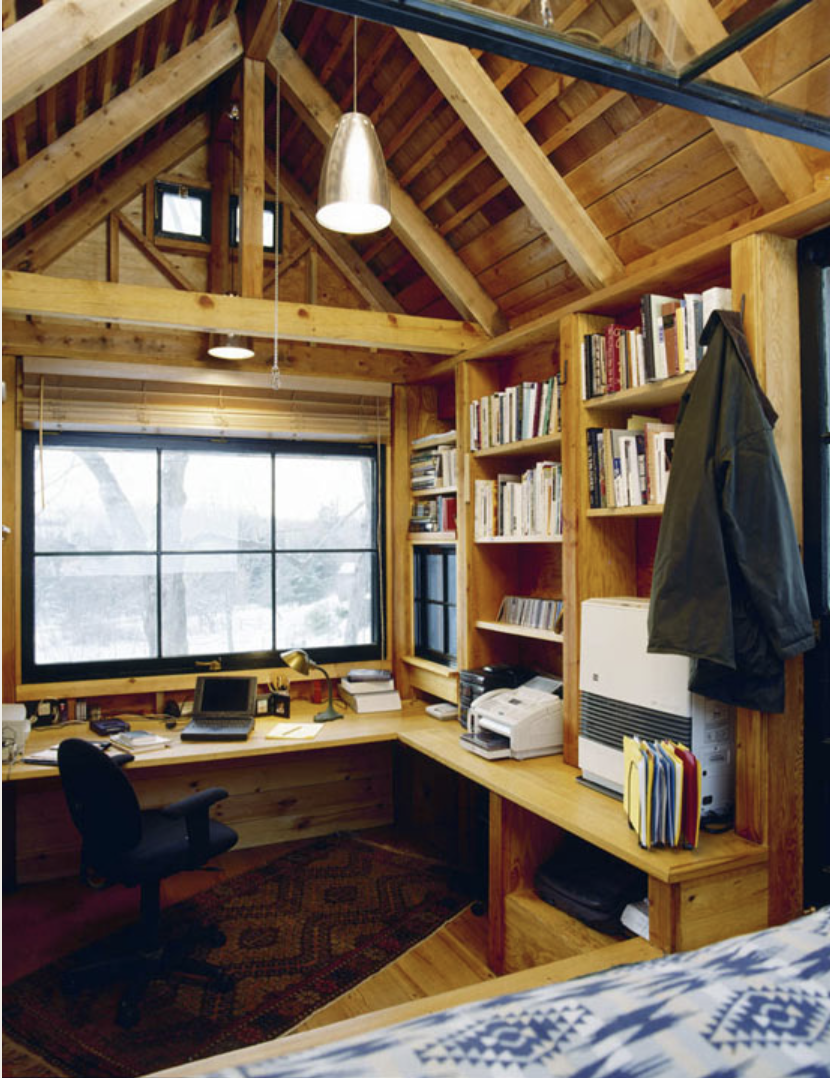
Michael Pollan built this small writing hut in the woods by his house in Connecticut. Pollan was inspired by French writer, Gaston Bachelard, who wrote in The Poetics Of Space, ‘I should say: the house shelters day-dreaming, the house protects the dreamer, the house allows one to dream in peace.’
“The house shelters day-dreaming, the house protects the dreamer, the house allows one to dream in peace.”
Neil Gaiman built a gazebo almost 30 years ago in his garden. He says, “I can look out of the window and some wildlife will occasionally look back…There are heaters down there, because it gets cold here in winter, and blankets on the chairs, ditto, and I have to try and remember not to leave bottles of ink on the table as they freeze. It’s just out of reach of the house Wifi, too, which is a good thing.”
It’s just out of reach of the house Wifi, too, which is a good thing.
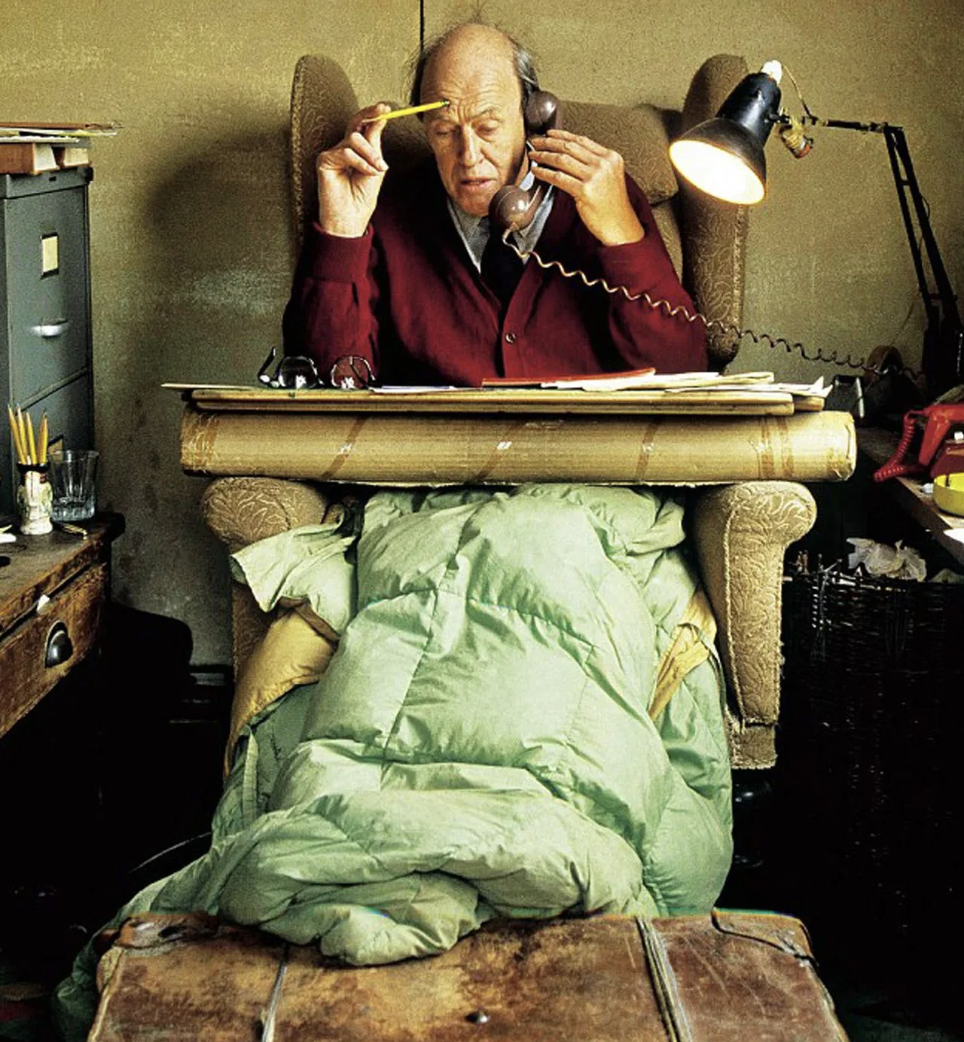
Roald Dahl wrote in a shed in Buckinghamshire, which he called his Gipsy House. Everything was within reach of his chair, according to illustrator, Quentin Blake. He also wrote with his favourite pencils on yellow paper.
Inspired by Dylan Thomas, who found writing at home difficult with young children, Dahl built his Gipsy House – a sanctuary, somewhere where he could work without any interruptions.
A sanctuary, somewhere where he could work without any interruptions.
There have been some wonderful new book releases and crime thriller series, so I thought I’d share some of my recent reads, books on my Wishlist and things I’ve watched and enjoyed.
CURRENTLY READING
The Giant on the Skyline, by Clover Stroud, is a memoir on home, belonging and learning to let go. It’s meditative, restless and unafraid to ask the difficult questions of life. Stroud’s ‘what ifs’ and ‘maybes’ are loud and resonant. I’m looking forward to seeing where the story will take me. I would recommend it from what I have read so far.
NEXT ON MY BOOKLIST
Kate Atkinson is a wonderful writer. In Death at the Sign of the Rook, Ex-detective Jackson Brodie is called to a Yorkshire town over a stolen Turner painting.
Once a grand country house, Burton Makepeace, Lady Milton’s home, has been converted into a hotel, hosting Murder Mystery weekends. As guests, including a vicar, an ex-army officer, aristocrats, we are taken on a Agatha Christie-style mystery tour.
Dream Count is the searing new novel from the author of Americanah, Chimamanda Ngoni Adichie. The Times hails this as a “feminist War and Peace.” It tells the story of four women and their loves, longings and desires.
Adichie tells the stories of these women while leading the reader to consider the choices we make and those made for us and on our interconnected world. Dream Count presents unflinching observations on the human heart, in language that soars.
WHAT I’VE WATCHED
Adolescence is a four-part crime drama series that will make you feel you are living the nightmare that 14 year old Jamie Miller’s family are enduring, as we are thrown into his arrest for killing school girl and fellow classmate, Katie.
This is a gripping and timely drama that runs close to real life, telling a story of violence and shame, as we watch the story unfold in their home, on the streets, in the police station, an in a chilling interview with a psychologist.
In this fast-moving crime thriller, Black Work, police officer, Jo Gillespie, is left with unanswered questions surrounding the death of her husband, who is shot dead in the line of action as an undercover officer. Jo has to work out who to trust and retrace his steps, as she is left to confront issues in her marriage in order to discover who killed her husband.
WordPress sends these milestone reminders, and it’s often a good time to take stock and realise how far you’ve come as a writer. I began writing my debut novel, Take Me to the Castle, in 2007. It was published in 2012 and won The People’s Book Awards in 2013. I began writing short stories with several going on to be published in literary journals. Some won writing competitions and I was inspired by so many other writers and their stories…Alice Munro, Lydia Davis, Hilary Mantel, David Gaffney, Raymond Carver, Franz Kafka, Anton Chekhov, Ernest Hemingway.
It’s been a journey! Eight books (including two novels, two short stories and work in four anthologies) later and I still get a buzz from writing down the first words of a story, a poem, or a novel. I don’t know where the last 12 years have gone, but it’s been quite a journey. Writing, the grit required to keep going and hone your craft, along with the journey to publication, requires motivation and determination. It demands new learning and a level of discipline, but it’s also a lot of fun. The creativity, the process, it’s all part of the draw to write.
I’ve learned that you will always surprise yourself, and others. You’ll never quite know where you are going. This applies even to the most tightly planned plot! You can read more about planning, plot and structure in these posts:
I get asked lots of questions on where I find my ideas and how I write. It’s different for poetry, short stories, flash fiction and novels. Novel writing is a marathon, not a sprint, but it also allows you more space for a story to unfold. Short stories and flash fiction, in particular, are less forgiving and no word can be wasted. You need to grab your reader in just a few hundred words, or more, or less!
I love writing. I love it as much now as I did 12 years ago. Blogging has also been a really helpful way of sharing my journey and what I’ve learned. I’ve been able to encourage new writers, connect with readers, network with people, interview authors and be interviewed. Thanks for joining me on the journey, whether you’ve just arrived (welcome!) or if you’ve been here a while. Drop any questions in the comments.
75,000 views in 12 years – 6,000 views a year – an average of 500 views a month.
That’s far more than I ever expected, especially as there have been years when I haven’t been able to post as often. But, I consistently show up and that’s the bottom line. So, what have I learned?
1. Social media isn’t dead, and neither are blogs
Despite the rumours swirling around about various different social media platforms dying off, I believe they are here to stay. Even though they morph and change – as some do lose popularity, others will inevitably pop up in their place. Your blog can feed into different social media platforms, but it is also a platform in its own right, and it’s a good one. I wrote a post asking Is Blogging Worth the Time and Effort? I still believe that it is.
2. People will continue to follow you if they feel invested in what you are writing
It’s much to my surprise that people who followed me 12 years ago (is it really that long?) remain engaged with what I post today. So, make it interesting and varied. I love hearing your thoughts and comments, and I’m still connected with many authors who I interviewed when I began blogging. Author interviews are popular. You can read my interviews with authors Matt Haig and S J Watson on their writing process and background, as well as some of the challenges they have faced.
3. Surprisingly, I get most of my traffic from Pinterest
Yes, I expected Pinterest to die off, but it remains ever popular, particularly in sharing content about books and bookshops. I wrote a post on How To Use Pinterest To Improve Your Writing, which talks about how useful it can be to pin ideas to boards for inspiration and to share content. Have a look at my boards, which include a TBR Pile, Book Reviews and Author Interviews, as well as information on writing and more. It still gets 2,000 monthly views.
4. Readers like variety, whether it’s author interviews, book news and reviews, tips on writing or pictures of beautiful libraries
Variety, as they say, is the spice…(you know the rest). I try to vary my blog posts. No one wants the same content every time. Mine, as an author, is on books and fiction writing. Staying within your niche is important, but variety keeps things more interesting, so I mix it up. The second most popular category, after writing tips, is libraries around the world, with Space to Read and Relax: Bookshop Cafés and Bars Around the World… and 30 Amazing Libraries and Bookshelves. So, what can I learn about my readers? They’re writers, aspiring writers, readers and book lovers.
5. Keep it visual. Images capture what you are writing about and grabs people’s attention
75,000 have come to my site as a result of my blog posts. That’s on top of usual website traffic. This means I get to engage with so many more people, and it’s led to author interviews and book recommendations. It’s a network. I write a lot about short stories, as an author of short stories and flash fiction. This guest post from Cary Bray on The Magic of Short Stories is a popular read.
7. People will read and re-read your writing over the years as you build up your content
8. Blogging is a creative outlet other than writing stories, books or poetry
It’s a way of sharing ideas that don’t go into books and journals. For example, this infographic on Quentin Blake’s Rights of the Reader Illustrations, which I shared on World Book Day is too good not to share.
9. It connects you with others
Like this reader response to the above Quentin Blake post:
What a lovely connection!
10. I really enjoy it!
I love writing, and I really like to be collaborative and share information and what I know, especially if it helps others. Whether that might be finding a new book to fall in love with, or discovering a new author, or helping people find beautiful libraries, or giving writing tips. Sharing things that you find, and your ideas, has a ripple effect and sparks creativity in others.I also find new readers for my own work, but this is not the primary reason for writing blog posts. For me, it’s secondary to everything else that I do.
Sharing things that you find, and your ideas, has a ripple effect and sparks creativity in others.
F. C. Malby writes novels, short stories, and poetry. She has travelled widely, teaching English in the Czech Republic, the Philippines and London. She is a qualified teacher and a photographer, and is currently studying for a Masters in Theology. Her debut novel, Take Me to the Castle, set in early 1990s Czech Republic, won The People’s Book Awards. Her second novel, Dead Drop, set in Vienna, is a lyrical, daring thriller about the undercover world of art crime. Her debut short story collection, My Brother Was a Kangaroo, includes award-winning stories published in literary magazines and journals worldwide. Malby’s poetry has appeared in journals, magazines and podcasts, and her second collection of short stories, A Place of Unfinished Sentences, includes stories that have been published in anthologies with Reflex Press and Pens of the Earth, and placed in competitions. She is a contributor to four print anthologies (the forth is forthcoming with Pens of the Earth in Oct 2024). She is also a contributor to anthologies published by Reflex Press, Unthank Book and Litro. Her short fiction won the Litro Magazine Environmental Disaster Fiction Competition, and was nominated for Publication of the Year in the Spillwords Press Awards. Her stories have been widely published both online and in print. Her website is here.
About A Place of Unfinished Sentences, by F. C. Malby
This second collection concerns the sentences we leave unfinished, questions surrounding sudden loss, a decision on a train. It covers themes of relationships and memory, exploring what happens when memory fails. It looks at beginnings and endings, weaving through themes of generations, family, uncertainty, and what happens when experiences change us.
From A Place of Unfinished Sentences
The woman sitting opposite me looks like the guy I used to date. Her face is angular, her eyes fixed to the page of a book I cannot see. I wonder why she reminds me of him. The door clunks back into the frame of the train’s carriage. A thud as it stops makes me jump, and a man with a trolley walks through and scans the seats.
“Tea? Coffee?” he asks, glancing at the ex-boyfriend lookalike.
“Neither,” she says, her eyes remaining fixed on the pages in her hands.
He looks at me. “Coffee, black, no sugar,” I say, without waiting to be asked. He lowers his shoulders, exhaling slowly as he pours me a cup from a large metal coffee pot. Steam rises from the spout, the scent of it licking at my nostrils. Saliva fills my mouth in anticipation.
“Snacks,” he says, almost as a statement. I can hear my Grandmother telling me that it’s rude not to form full sentences. Nobody is in a full sentence mood this morning. The trains have been delayed by three hours because of a ‘body on the line’ and the weather is damp and oppressive. Normally, the announcement is ‘leaves on the line.’ This morning it’s a body. An elderly lady told me it was a young man. Such a waste of a life, she had said with a tone of disgust, eyebrows raised, as though taking your own life was comparable to a child throwing away a gift they no longer wanted. I had started to explain that you don’t know what’s going on in someone else’s life, but she walked away mid-sentence.
London was a place of rush, a place of interchange, a place of unfinished sentences. The young boy’s life might have been an unfinished sentence: a friend in a rush, too busy to hear that he had felt low for months; an interchange of parents going to and from work, passing like ships in the night; a sentence about feeling hopeless, left unfinished.
You must be logged in to post a comment.