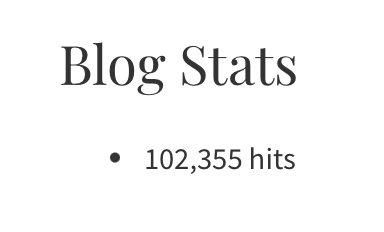
Celebrating 100,000 Blog Views with Writers and their Creative Spaces

To celebrate reaching a blogging milestone of over 100,000, I thought I’d share more of what you’ve enjoyed recently. One of my most viewed posts over the past month has been Writers and Their Creative Spaces. So, here are some of the creative spaces of other writers.

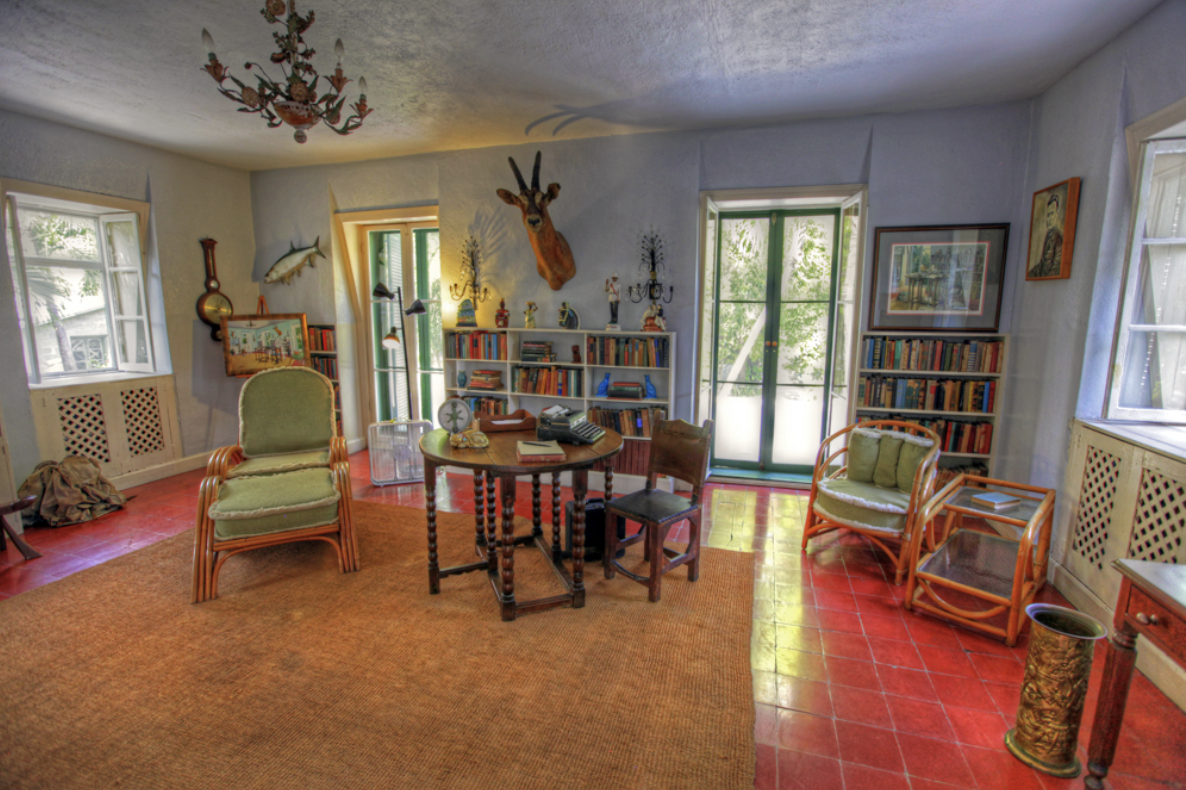
Hemingway’s writing space at his home in Florida Keys. He wrote whilst on his boat or at his Key West home. Here, he wrote The Old Man and the Sea.

In celebration of hitting a blogging milestone of over 100,000 views

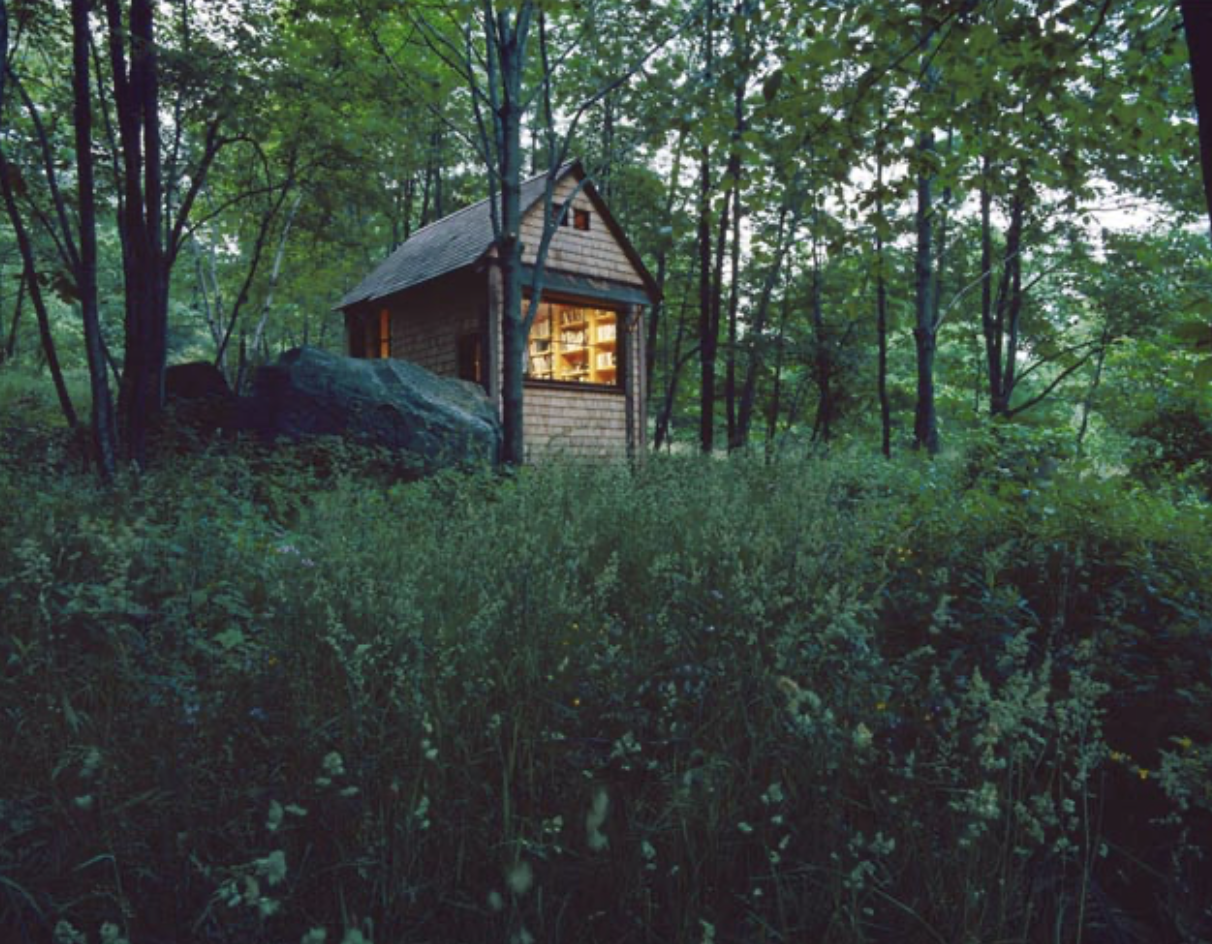
Michael Pollan built this small writing hut in the woods by his house in Connecticut. Pollan was inspired by French writer, Gaston Bachelard, who wrote in The Poetics Of Space, ‘I should say: the house shelters day-dreaming, the house protects the dreamer, the house allows one to dream in peace.’

“The house shelters day-dreaming, the house protects the dreamer, the house allows one to dream in peace.”

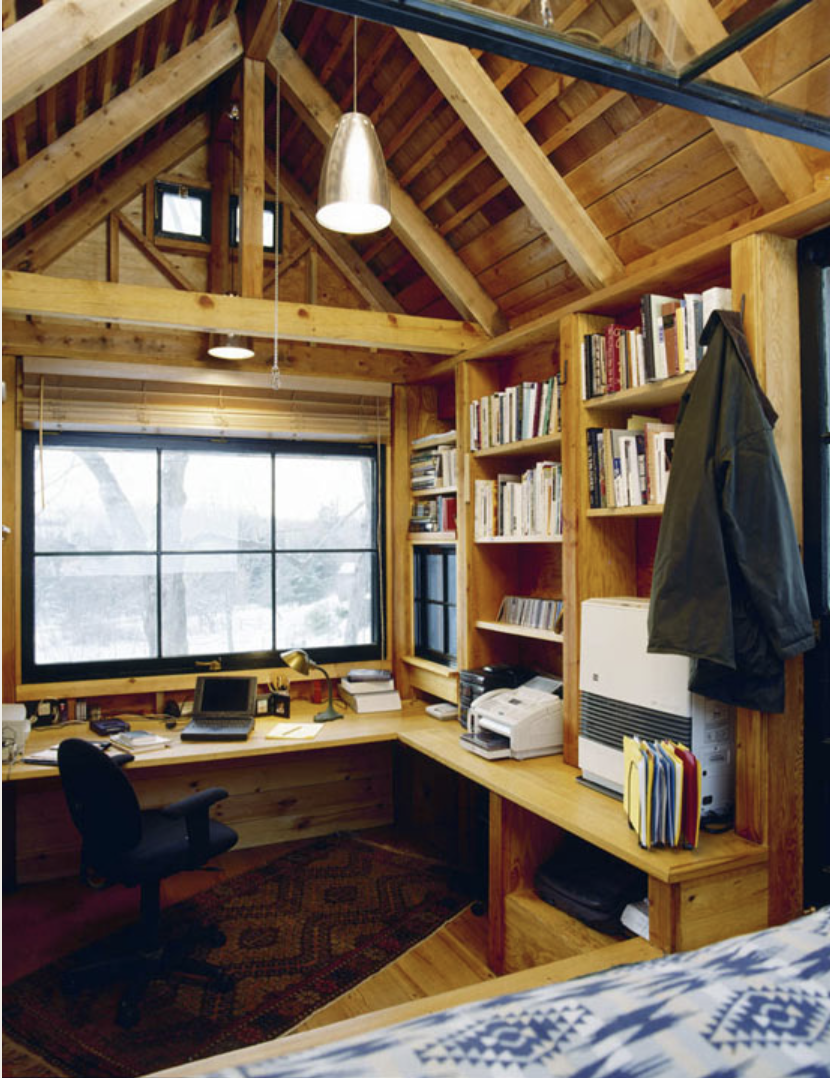
Neil Gaiman built a gazebo almost 30 years ago in his garden. He says, “I can look out of the window and some wildlife will occasionally look back…There are heaters down there, because it gets cold here in winter, and blankets on the chairs, ditto, and I have to try and remember not to leave bottles of ink on the table as they freeze. It’s just out of reach of the house Wifi, too, which is a good thing.”

It’s just out of reach of the house Wifi, too, which is a good thing.

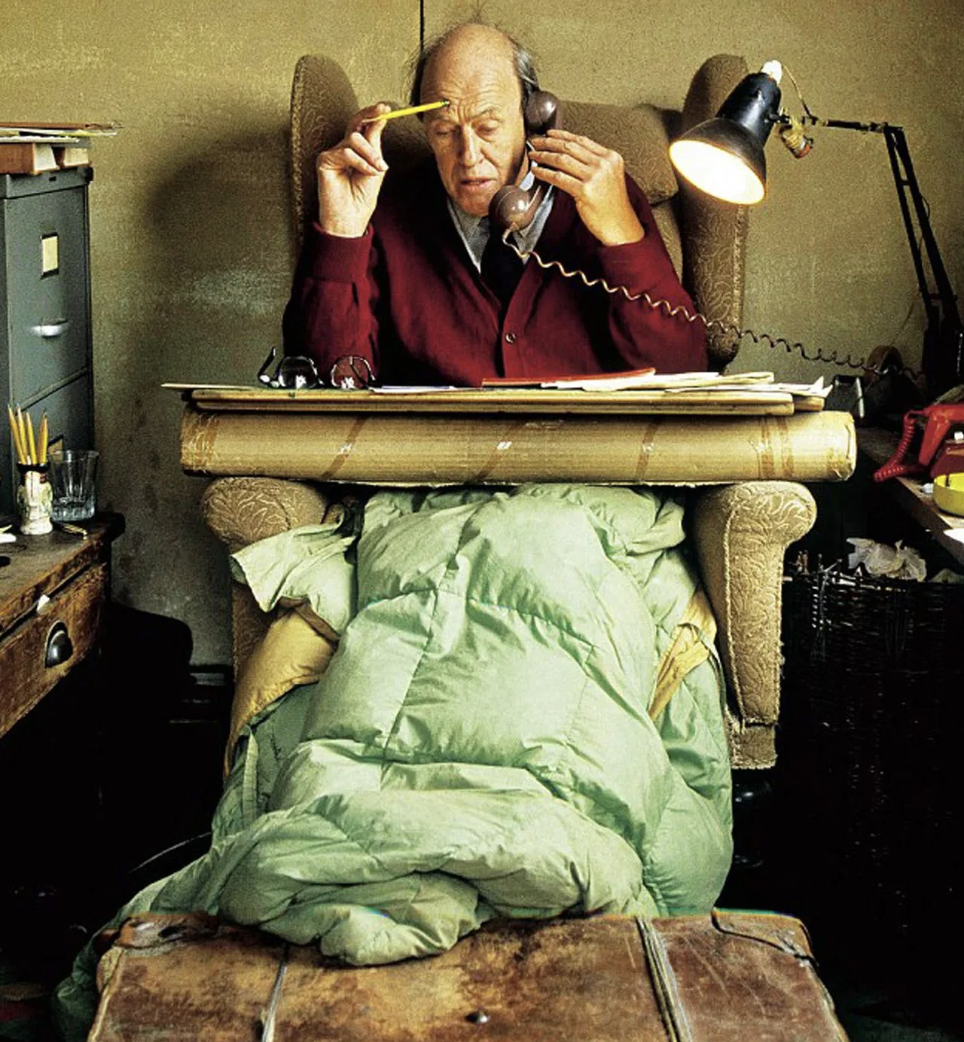
Roald Dahl wrote in a shed in Buckinghamshire, which he called his Gipsy House. Everything was within reach of his chair, according to illustrator, Quentin Blake. He also wrote with his favourite pencils on yellow paper.

Inspired by Dylan Thomas, who found writing at home difficult with young children, Dahl built his Gipsy House – a sanctuary, somewhere where he could work without any interruptions.

A sanctuary, somewhere where he could work without any interruptions.

Poems Published in Cable Street Press: Issue 9

Four of my poems have been published in the marvellous Summer Edition of Cable Street Press, Issue 9.

A word from the editor on Issue 9:

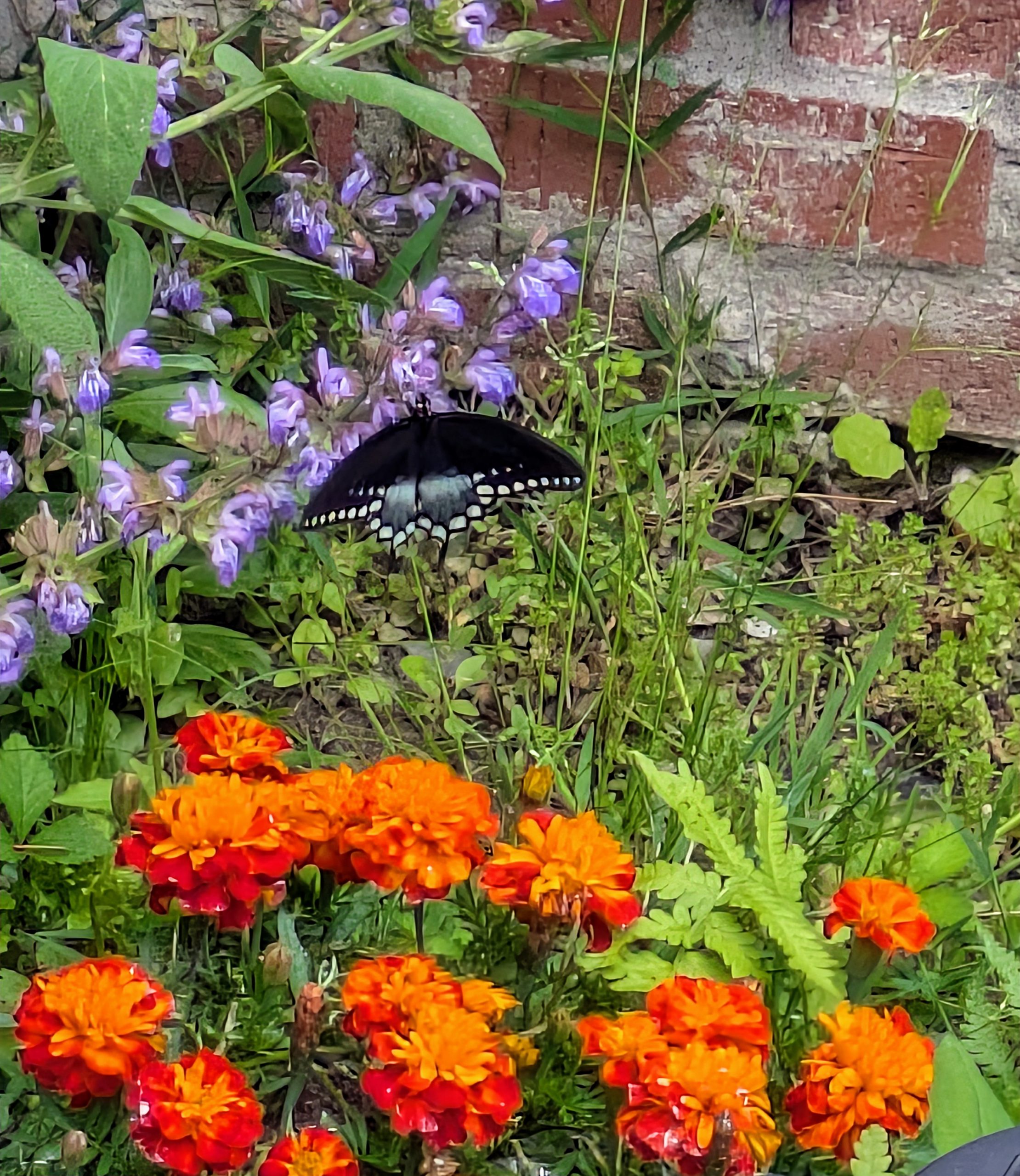
Tiger Swallowtail Butterfly, Sage Flowers, Marigolds.

Bastille Day has come and with it, the explosion of writing and art that is the latest Cable Street Issue. I’ll be frank with you—every issue blows my mind. I see all the pieces one by one and they are surprising, delightful, shocking, thought provoking. But then they all come together, and each and every time, I’m moved by the web of art in conversation that is created...And these are only some of the many treasures of this issue. Storm into this tower at your own speed, making sure to check out the poetry of F.C. Malby and Roberta Schultz…There is plenty to enjoy on this Bastille Day weekend.

— Hardy Griffin for the editors

Poems by F C Malby

My poems, Crossing, I Have Already Gone, Moths, and Where Have All the Birds Gone feature a range of themes, including the contentious issue of immigration. Through Crossing, I wanted to give a voice to the voiceless; this is a particularly exigent issue.

Crossing

I line up with other bedraggled bodies,
some look as though they might be dying,

others carry the weight of grief. I watched
a child slip away while we waited yesterday,

saw the life leave its lungs, the mother clung
to its body, tears wet the child’s face. It’s not

pretty, it’s worse than they tell you. I don’t
know whether we will make it or whether

we might be taken back. I don’t speak
the language, few of us do. It matters.

The look on the guard’s faces is difficult
to read, tells me they’ve seen so much

of this. None of us know what to do or
what’s next. Clothes dry on a makeshift

line between tents, next to plastic bags
of what we have left after the police take

anything else. Some of us camp under
bridges, avoiding the boulders that stop

us settling on softer ground. We wait for
the next boat, for a better life. The

mother is still holding the child. We
wait. Some of us won’t make it.

Read my other three poems here.

My Writing Journey: From Novels to Short Stories

Photo credit: Patrick Fore

WordPress sends these milestone reminders, and it’s often a good time to take stock and realise how far you’ve come as a writer. I began writing my debut novel, Take Me to the Castle, in 2007. It was published in 2012 and won The People’s Book Awards in 2013. I began writing short stories with several going on to be published in literary journals. Some won writing competitions and I was inspired by so many other writers and their stories…Alice Munro, Lydia Davis, Hilary Mantel, David Gaffney, Raymond Carver, Franz Kafka, Anton Chekhov, Ernest Hemingway.

It’s been a journey! Eight books (including two novels, two short stories and work in four anthologies) later and I still get a buzz from writing down the first words of a story, a poem, or a novel. I don’t know where the last 12 years have gone, but it’s been quite a journey. Writing, the grit required to keep going and hone your craft, along with the journey to publication, requires motivation and determination. It demands new learning and a level of discipline, but it’s also a lot of fun. The creativity, the process, it’s all part of the draw to write.

I’ve learned that you will always surprise yourself, and others. You’ll never quite know where you are going. This applies even to the most tightly planned plot! You can read more about planning, plot and structure in these posts:

Warning: Structural Work Needed – Plotting Your Novel

Permission To Not Write In A Linear Fashion?

Narrative Arc: Shaping Your Story

What’s Your First Draft Like? Author Interview

I get asked lots of questions on where I find my ideas and how I write. It’s different for poetry, short stories, flash fiction and novels. Novel writing is a marathon, not a sprint, but it also allows you more space for a story to unfold. Short stories and flash fiction, in particular, are less forgiving and no word can be wasted. You need to grab your reader in just a few hundred words, or more, or less!

I love writing. I love it as much now as I did 12 years ago. Blogging has also been a really helpful way of sharing my journey and what I’ve learned. I’ve been able to encourage new writers, connect with readers, network with people, interview authors and be interviewed. Thanks for joining me on the journey, whether you’ve just arrived (welcome!) or if you’ve been here a while. Drop any questions in the comments.

Everybody’s Reviewing – Feature

Thank you to Everybody’s Reviewing, Creative Writing, Leicester, for this feature of my second collection of short stories, A Place of Unfinished Sentences.

Monday 9 September 2024

F. C. Malby, “A Place of Unfinished Sentences”

F. C. Malby writes novels, short stories, and poetry. She has travelled widely, teaching English in the Czech Republic, the Philippines and London. She is a qualified teacher and a photographer, and is currently studying for a Masters in Theology. Her debut novel, Take Me to the Castle, set in early 1990s Czech Republic, won The People’s Book Awards. Her second novel, Dead Drop, set in Vienna, is a lyrical, daring thriller about the undercover world of art crime. Her debut short story collection, My Brother Was a Kangaroo, includes award-winning stories published in literary magazines and journals worldwide. Malby’s poetry has appeared in journals, magazines and podcasts, and her second collection of short stories, A Place of Unfinished Sentences, includes stories that have been published in anthologies with Reflex Press and Pens of the Earth, and placed in competitions. She is a contributor to four print anthologies (the forth is forthcoming with Pens of the Earth in Oct 2024). She is also a contributor to anthologies published by Reflex Press, Unthank Book and Litro. Her short fiction won the Litro Magazine Environmental Disaster Fiction Competition, and was nominated for Publication of the Year in the Spillwords Press Awards. Her stories have been widely published both online and in print. Her website is here

About A Place of Unfinished Sentences, by F. C. Malby

This second collection concerns the sentences we leave unfinished, questions surrounding sudden loss, a decision on a train. It covers themes of relationships and memory, exploring what happens when memory fails. It looks at beginnings and endings, weaving through themes of generations, family, uncertainty, and what happens when experiences change us.

From A Place of Unfinished Sentences

The woman sitting opposite me looks like the guy I used to date. Her face is angular, her eyes fixed to the page of a book I cannot see. I wonder why she reminds me of him. The door clunks back into the frame of the train’s carriage. A thud as it stops makes me jump, and a man with a trolley walks through and scans the seats.

“Tea? Coffee?” he asks, glancing at the ex-boyfriend lookalike.

“Neither,” she says, her eyes remaining fixed on the pages in her hands. 

He looks at me. “Coffee, black, no sugar,” I say, without waiting to be asked. He lowers his shoulders, exhaling slowly as he pours me a cup from a large metal coffee pot. Steam rises from the spout, the scent of it licking at my nostrils. Saliva fills my mouth in anticipation.  

“Snacks,” he says, almost as a statement. I can hear my Grandmother telling me that it’s rude not to form full sentences. Nobody is in a full sentence mood this morning. The trains have been delayed by three hours because of a ‘body on the line’ and the weather is damp and oppressive. Normally, the announcement is ‘leaves on the line.’ This morning it’s a body. An elderly lady told me it was a young man. Such a waste of a life, she had said with a tone of disgust, eyebrows raised, as though taking your own life was comparable to a child throwing away a gift they no longer wanted. I had started to explain that you don’t know what’s going on in someone else’s life, but she walked away mid-sentence. 

London was a place of rush, a place of interchange, a place of unfinished sentences. The young boy’s life might have been an unfinished sentence: a friend in a rush, too busy to hear that he had felt low for months; an interchange of parents going to and from work, passing like ships in the night; a sentence about feeling hopeless, left unfinished. 

Read the full feature at Creative Writing, Leicester.

Where do you find your ideas? Short Story and Flash Fiction Inspiration

As an author, the question I get asked most often is, Where do you find your ideas? It’s a notoriously difficult question to answer and most authors struggle to voice, or even to know, where they find their ideas. But, I’m going to give it a try! The short answer is that it comes from the strangest of places, and I need to begin with the adage that everyone is different.

Where do you find your ideas?

The most important important advice I could give any aspiring author is, be an observer. Watch people, observe their movements, eye contact, body language, look at what they don’t say. Only 7% of communication is verbal, in other words through what people say, which means that a whopping 93% of communication is nonverbal – body language, gestures, tone of voice, facial expressions, body posture. A person’s body language is a part of communication and reflects emotions and moods.

Be an observer.

Dreams are often where ideas form, especially in those liminal spaces between the states of being awake and asleep. New neuroscience research from the Paris Brain Institute shows that the phase before we fully fall asleep is hugely creative for our brains. American Inventor, Thomas Edison, used partial naps while holding spheres in his hands to harness his inspiration. The spheres would fall as he fell asleep and wake him at the right time to capture his sleep-inspired ideas. Physicist Albert Einstein and artist Salvador Dali also believed in short bursts of sleep to boost creativity. The experiment, which is reported in the Science Advances article, Sleep onset is a creative sweet spot. Although sleep is often seen as a waste of time and productivity, it is actually essential to our creative performance.

The phase before we fall asleep is hugely creative for our brains.

Imagine that you are taking a photograph of a moment, a snap shot in time. I often walk or drive past a scene, usually of two or more people talking, sometimes a lone person doing something interesting or curious, and I wonder what they might be saying or thinking, and how they might be feeling. Authors are endlessly curious and out of this curiosity often comes new ideas for stories. Imagine taking a photograph of the scene. What would you be wanting to know as a viewer? Who are these people? Where are they from? What are they doing? What is the emotion underlying the event? Could something else be happening?

Imagine that you are taking a photograph of a moment.

Use a prompt – an image, a poem or news article. What ideas does this conjure up in your imagination? Is there big news event with an image of a person or a story about them? Can you find an offshoot from this? Let’s have a go….this is an image from a BBC news article on inflation. There is a woman holding a pizza in a supermarket. What is she thinking (inflation aside!)? What else might be going on in her life? Does she live alone or with a family or a partner? What does her body language convey? Is this a local shop or is she passing through, or escaping something? So many ideas can come from just one image that are entirely unrelated to the image or event. Sometimes a visual cue helps.

Sometimes a visual cue helps.

Have you had an interview or an interesting conversation or event recently? Was there a person who stood out or a part of the dialogue that stayed with you? This is fiction, so the details will need to be changed, but what can you extract from what was said? Did it make you think of something else? Sometimes writing down ideas in a journal can help when you sit down to write. I sometimes do this, although the best ideas tend to stay in your mind.

Be curious.

Photo credit: Shutterstock & BBC News.