Exciting News: Four Poems to be published in Cable Street Literary Journal

I’m thrilled to have an acceptance of four poems to be published in International Literary Journal, Cable Street, in July. They only publish work three times a year, so I’m happy that my poems have found their way into this wonderful journal. I don’t know about you, but I love a backstory, so I thought I’d share a little about the publishers ahead of the publication.

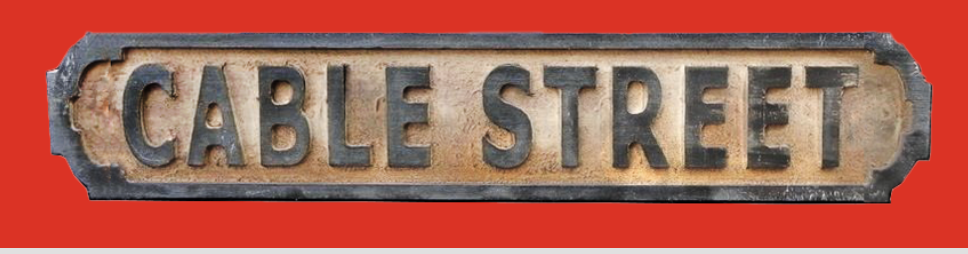
CABLE STREET


“We are, first and foremost, an international, online journal fostering exchange among writers and readers of many languages. We post new issues three times a year: on or about May 1, Bastille Day, and Thanksgiving.

Our name reflects the essence of our journal: a festival of communication across nations and traditions, a chance to wander the byways of art from many hands and many lands. 

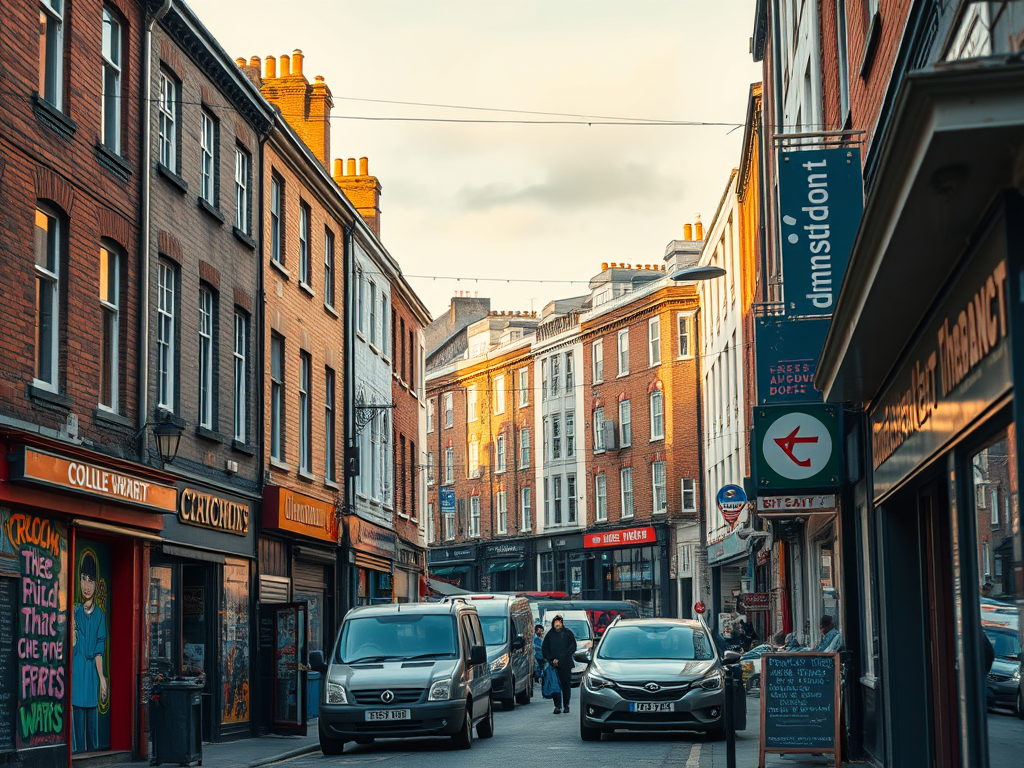
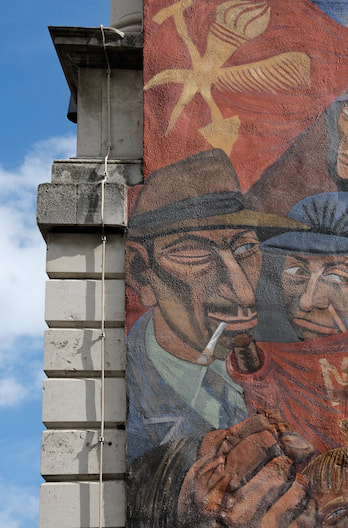
Cable Street is a road in London’s East End. It takes its name from the ships’ cables once made there—cables that traveled the world on British fleets. A place enlivened, then and now, by the dozens of languages spoken by sailors, traders, and immigrants. A place where, in 1936, a coalition of antifascists took a stand against the British Union of Fascists, turning back the tide of repression and ethnocentric dominion.

Like our namesake thoroughfare, Cable Street embraces the human family in its multitude of cultures.

Photo credit: Cable Street Journal, Cable Street, London

More news in July!

What I’ve Learned about Social Media & Blogging on Writing for 12 Years with Over 75,000 views

Photo: W.H. Auden’s Summerhouse in Kirchstetten, Austria. F. C. Malby.

75,000 views in 12 years – 6,000 views a year – an average of 500 views a month.

That’s far more than I ever expected, especially as there have been years when I haven’t been able to post as often. But, I consistently show up and that’s the bottom line. So, what have I learned?

1. Social media isn’t dead, and neither are blogs

Despite the rumours swirling around about various different social media platforms dying off, I believe they are here to stay. Even though they morph and change – as some do lose popularity, others will inevitably pop up in their place. Your blog can feed into different social media platforms, but it is also a platform in its own right, and it’s a good one. I wrote a post asking Is Blogging Worth the Time and Effort? I still believe that it is.

2. People will continue to follow you if they feel invested in what you are writing

It’s much to my surprise that people who followed me 12 years ago (is it really that long?) remain engaged with what I post today. So, make it interesting and varied. I love hearing your thoughts and comments, and I’m still connected with many authors who I interviewed when I began blogging. Author interviews are popular. You can read my interviews with authors Matt Haig and S J Watson on their writing process and background, as well as some of the challenges they have faced.

3. Surprisingly, I get most of my traffic from Pinterest

Yes, I expected Pinterest to die off, but it remains ever popular, particularly in sharing content about books and bookshops. I wrote a post on How To Use Pinterest To Improve Your Writing, which talks about how useful it can be to pin ideas to boards for inspiration and to share content. Have a look at my boards, which include a TBR Pile, Book Reviews and Author Interviews, as well as information on writing and more. It still gets 2,000 monthly views.

4. Readers like variety, whether it’s author interviews, book news and reviews, tips on writing or pictures of beautiful libraries

Variety, as they say, is the spice…(you know the rest). I try to vary my blog posts. No one wants the same content every time. Mine, as an author, is on books and fiction writing. Staying within your niche is important, but variety keeps things more interesting, so I mix it up. The second most popular category, after writing tips, is libraries around the world, with Space to Read and Relax: Bookshop Cafés and Bars Around the World… and 30 Amazing Libraries and Bookshelves. So, what can I learn about my readers? They’re writers, aspiring writers, readers and book lovers.

5. Keep it visual. Images capture what you are writing about and grabs people’s attention

See number 3. The visual nature of Pinterest draws people in and so do the visuals on blog posts. One of my recent blog post photos of my TBR book pile ended up in the Durham University Student Newspaper! We’re visual creatures, so creative visuals, as well as written content is important.

6. Blogging draws people to your website

75,000 have come to my site as a result of my blog posts. That’s on top of usual website traffic. This means I get to engage with so many more people, and it’s led to author interviews and book recommendations. It’s a network. I write a lot about short stories, as an author of short stories and flash fiction. This guest post from Cary Bray on The Magic of Short Stories is a popular read.

7. People will read and re-read your writing over the years as you build up your content

Once your content is up, it’s there to stay for as long as your site exists, which gives it longevity. My most read post about the Narrative Arc has been viewed 16,000 times and is on my top 5 list of most read posts, alongside Kurt Vonnegut and the Myth of Talent, Writing Prompts, What we can learn from Beauty and the Beast About Plot, Tension and Obstacles and Hemmingway’s Tip Of The Iceberg: Omit What the Reader Knows.

8. Blogging is a creative outlet other than writing stories, books or poetry

It’s a way of sharing ideas that don’t go into books and journals. For example, this infographic on Quentin Blake’s Rights of the Reader Illustrations, which I shared on World Book Day is too good not to share.

9. It connects you with others

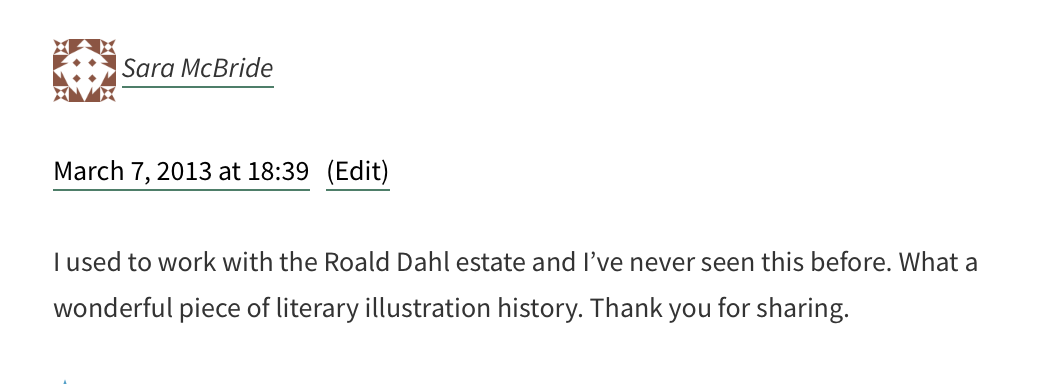
Like this reader response to the above Quentin Blake post:

What a lovely connection!

10. I really enjoy it!

I love writing, and I really like to be collaborative and share information and what I know, especially if it helps others. Whether that might be finding a new book to fall in love with, or discovering a new author, or helping people find beautiful libraries, or giving writing tips. Sharing things that you find, and your ideas, has a ripple effect and sparks creativity in others. I also find new readers for my own work, but this is not the primary reason for writing blog posts. For me, it’s secondary to everything else that I do.

Sharing things that you find, and your ideas, has a ripple effect and sparks creativity in others.

Two forthcoming Book Releases in 2024

I have some exciting news! There are two new books being released this year, both include my short stories. As an author, it’s such an amazing feeling when your work is about to be released into the hands of readers around the world. I love hearing reader feedback and discovering what resonates with individuals.

Since the release of my first novel in 2012, I have had a second novel published, a short story anthology (soon-to-be two) and work published in three anthologies (soon-to-be four) I have also had many stories and poems published in literary journals worldwide and some competition winners. I was asked to read for a writing competition for a journal and have given readings and led writing workshops. It never gets odd. I still love writing and engaging with readers.

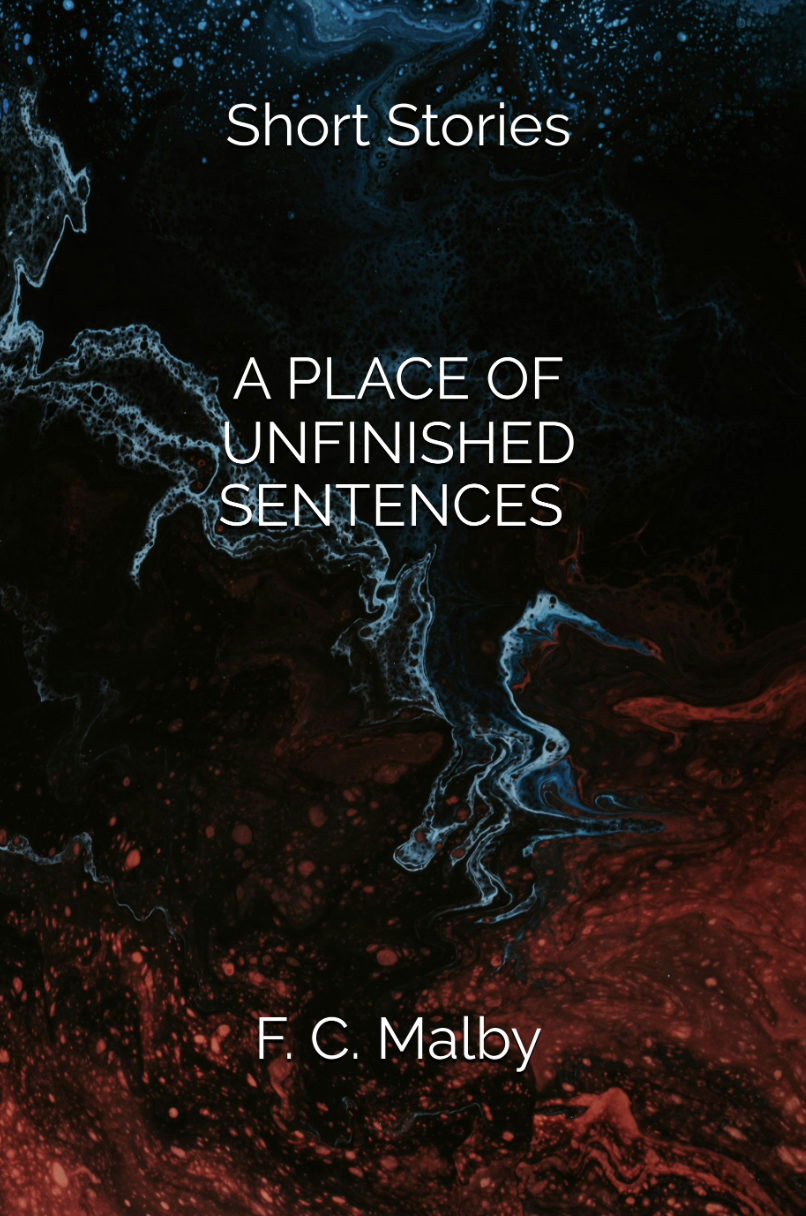
The first book is my second collection of short stories, A Place of Unfinished Sentences.

The sentences we leave unfinished, questions surrounding sudden loss, a decision on a train. This second collection covers themes of relationships and memory, exploring what happens when memory fails. It looks at beginnings and endings, weaving through themes of generations, family, uncertainty, and what happens when experiences change us.

“F C Malby’s stories capture characters teetering on the edge of precipices in their lives, sometimes literal, sometimes metaphorical, as they decide whether or not to take a leap of faith into the unknown. These intense, beautifully realised and ice-sharp stories momentarily suspend us over an Everestian abyss.” Jonathan P Taylor, author and Senior Lecturer in Creative Writing, University of Leicester

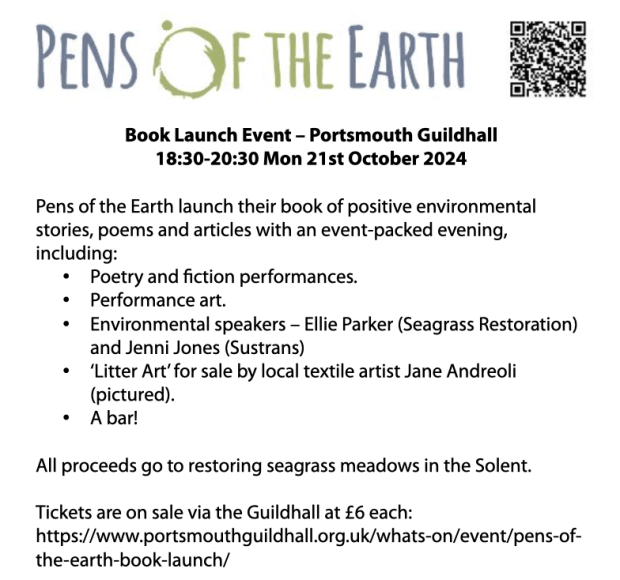
The second book that I want to share with you will be published by Pens of the Earth, who are launching a collection of stories, poems and environmental articles on 21st October 2024. My short story, Prolific, will be in with many others with all profits from book sales going to the Solent Seagrass Restoration Project.

I’ve Joined the Linen Press Family

I’m thrilled to be able to share the news that I’ve been signed by Linen Press, who I really respect and admire. We are looking forward to releasing my second novel, a psychological thriller about the art underworld, in early 2023.

“Linen Press is a small, independent publisher run by women, for women. We are now the only indie women’s press in the UK.

Our bar of exceptional writing is raised with each new publication and I’m fiercely proud of our talented authors.

Our policy is to encourage and promote women writers and to give voice to a wide range of perspectives and themes that are relevant to women. We display and rejoice in the differences in female creative voices.

We publish books that are diverse, challenging, and surprising. The collective background of our writers is a multi-coloured patchwork of cultures, countries, ages and writing styles.”

Established 2005  •  Finalist 2015 Women In Publishing Pandora award  •  Shortlisted 2019 Most Innovative Publisher Saboteur Awards.

Interview with Author and 1000words Editor, Natalie Bowers

100words

I met Natalie when my short fiction piece, North Norfolk Coast, was published online in 1000words at the beginning of July. 1000words publishes flash-fiction of up to 1000 words in length, written in response to an image. I have been impressed with the site and the quality of the work for a while. Natalie’s response to my submission was really professional and friendly, and I have enjoyed reading some of her own fiction (more on her work at the end of the post). I was thrilled when she agreed to an interview, so thank you for joining us, Natalie, and for answering some questions that I think authors often ask, or want to ask.

When and how did 1000words begin, and what inspired you to start gathering flash fiction?

1000words began in 2012 as part of the first National Flash-Fiction Day. I’d just finished an online flash-fiction course with Calum Kerr, the brains behind NFFD, who’d said he was looking for people to organise events, online and off. I’ve always had a secret desire to run my own fiction magazine, so this seemed the perfect opportunity to start one. I also love photography, so what better way was there to blend my two main interests and fulfill an ambition than by starting 1000words?

 What is flash fiction, for those who are new to the form, and how is it unique?

There are as many definitions of flash-fiction as there are people writing it, but for me, flash-fiction is simply a very short story. Although at 1000words we accept stories of up to 1000 words in length, I actually prefer reading and writing stories no longer than 500 words. When it comes to flash-fiction I like to be punched in the gut. I like flash-fiction to be short, sharp and to take my breath away.

 The idea of using an image prompt from the Pinterest page is very creative. How do you decide which images to use?

I go with my instincts. If I see an image and find myself immediately making up a story, I pin the image. I’ve pinned quite a few of my own photos on our Pinterest boards too, as I always have a camera on me and am constantly on the lookout for story ideas.
pinterest 1000

There is a wonderful range of stories on the site. How do you chose what will be published, and what are you looking for in a piece of fiction?

Again, I go with my instincts. If the opening few lines grab me, I know I’m likely to enjoy the whole piece and will most likely publish it. What I’m really looking for is a consistent narrative voice. It doesn’t have to be a confident voice, but I need to feel as if the narrator is a real person and believes in the story they’re telling. I’m also looking for something special: a surprising simile, a poignant observation, a subverted cliché, an old story told in a new way, or a new story told in an old way. It’s hard to define, but I know it when I see it.

Is there anything that will automatically send work to the rejection pile, and are there any submission tips you can share? 

There’s nothing that will automatically send work to the rejection pile. If I decline to publish a story, it’s usually due to a combination of factors such as an inconsistent narrative voice, unnatural sounding dialogue, cliché imagery or plot or over-explaining (not leaving enough to the reader’s imagination). If a story has a lot of grammatical mistakes and doesn’t look as if it’s been proofread properly then I’ll probably turn it down, as it’ll be too much work to prepare it for publication. One of the biggest turn-offs for me, though, are stories with a twist ending where the twist hasn’t been sufficiently foreshadowed or where it’s been so obviously sign-posted that I’ve guessed it before the end. It’s a difficult balancing act, and one I struggle with myself.

Tell us a little about yourself and your own writing?

I’ve always written stories in my head, if not on paper. I remember writing and illustrating a book for my little brother when I was about ten. It was a complete rip-off of the children’s TV series Jamie and His Magic Torch, but I put my heart and soul into it! In my early teens, I graduated to Star Wars fanfiction, but I didn’t write much at all in my late teens and twenties, I was too busy with school, university, work and then babies – I did science A-levels, a degree in Biochemisty, a PGCE in secondary science education, taught for a few years and then gave it all up to raise two lovely children. I’d had depression and anxiety after the birth of my daughter in 2005, and the doctor advised me to find something with which to occupy my brain. Writing seemed like a good idea, so in 2007, after a bit of dabbling, I took The Open University’s Start Writing Fiction Course, and I haven’t really looked back since. I’ve written quite a few short stories, but flash-fiction is where I feel most at home and I’m pleased to say that I’ve had a fair few pieces published here and there. Right now, I’m working on a collection of summer-themed flash-fictions and in September (if I get enough punters) I’ll be teaching my first ever writing course in the adult education department of my local secondary school. Bit scary!

Are there any short fiction authors who are a particular inspiration? 

Loads! I have a ‘Recommended Reading’ page on my website where I list lots of my favourite authors and stories, but if I had to name just a few, they’d be: Calum Kerr, Nik Perring, Kevlin Henney, Shirley Golden, Cathy Lennon, Lorrie Heartshorn, Angela Readman, Kurt Vonnegut, Raymond Carver, Elmore Leonard, Annie Proulx and Kate Atkinson. These are the people whose work I rush to read. (That was more than just a few, wasn’t it?!)

Friends of 1000words are flashandzoom, Paragraph Planet and Stories with Pictures. Can you tell us a bit about each of them?

flashandzoom is a photography and poetry project run photographer Jaime Hill and a writing pal of mine, Zoe Mitchell. The aim of the project is to provide a fresh perspective to photography and poetry, and to create art that reaches people on a number of levels. It’s been a bit quiet of late, but what they’ve produced in the past has been beautiful.

Paragraph Planet publishes a 75-word paragraph (fiction and non-fiction) EVERY SINGLE DAY of the year, which is an amazing feat. You can also read author interviews and there’s a sister site called ‘Writing Workout’ where writers can do all sorts of writing exercises. I’ve had a couple of pieces published on Paragraph Planet and intend to send more soon.

Stories and Pictures is a site that brings writers and artists together in collaboration. It’s chock-full of beautiful stories accompanied by beautiful pictures. Some of the stories have been inspired by pictures, and some of the pictures have been inspired by stories. I’ve had a story and a photo published there too.
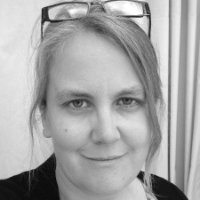
  natalie 2 Natalie Bowers, along with Heather Stanley, is the editor and publisher of 1000words online flash fiction magazine. She lives in Hampshire with her husband, two children and a growing collection of ukuleles. Natalie has a degree in Biochemisty, a PGCE in secondary science education, and has taught Science and A-Level Biology. Her short stories have appeared in print and her flash-fiction has been published in various online journals. You can find a list of her publications on her blog, and she is a fellow Ether Books author. You can follow 1000words on Facebook and Twitter.