The Best Characters Are Broken

Broken Glass

‘The best characters are broken.’

I came across this quote yesterday and it has stayed with me. I started to think about why this is the case and how the reader identifies with broken characters. The quote was a little nugget in a much longer article by writer Faith Hunter. She writes in the fantasy/thriller genre but this concept travels across all genres of fiction and, I should add, non-fiction.

Why? 

Psychologists suggest there is a part in many of us that is broken and often hidden from the world, a part of us which we are afraid to reveal for fear of other people’s reactions. As children we have no qualms about crying or screaming if something is wrong, or throwing ourselves onto the floor and lying prostrate with fists pounding the carpet. Anyone seen this? Yes, well. Somewhere along the line, though, we are told to temper our responses with phrases like –  ‘don’t cry,’ ‘try to behave,’ ‘big girls/boys don’t shout.’

While this helps to create a society which is relatively restrained (most of the time), it also teaches us to suppress our fears or pain. It tells us that emotions should be dealt with quietly and privately, and not in public. It pushes us into corners where we have to wrestle and fight against feelings of fear, inadequacy, rejection, pain and even phobias. It’s not unlike snake charming gone awry. These are just a few of the murky areas of our lives which we have been taught to just sit on and ignore, in the hope that they will just vanish.

Why do readers need this in a story?

Why do we read books at all? For a vast majority it is a means of escape, a way of entering into an imaginary world where the rules have changed and events are happening to other people, events which stir up emotions in the reader and trigger memories of their own fears. We need to feel that we are not alone and books can provide an intense range of emotions in the reader. The level of which is down to the craftsmanship of the writer.

In a good novel we are taken on a journey with a roller coaster of emotions which vary in intensity throughout the pages. The journey can be frightening and it can be comforting, it call tell us that our fears are universal, it can navigate us through the choppy waters of disbelief, it can heal the deeper parts of our soul and can remind us that all of humanity lives with these bundles of hidden thoughts, and all in the safety and privacy of a collection of words, neatly bound in a cover without us having to leave the house or to communicate these fears.

How can we find the ideas?

As writers we have fears which need to be exploited to form a convincing plot, fears which will leave the reader turning page after page. Some of these fears begin in childhood, others might be more recent, but they are there and they need to be dug up, excavated and displayed in the pages of your books. Readers connect with writers who artfully pull at these strings – strings of challenge, of hopelessness, of a fear of change. Whatever the issues with your key characters, you need to delve into the murky waters surrounding an event and pull out the rawness of the emotions.

If there is no tension or emotion in your story it won’t fly.

Open up the corridors of your inner world and pull out all that lurks in the darkness. You will help your readers to relate to the characters and bring a believable plot to life.


Step Away From The Vehicle

Step away from the vehicle – and put your novel in a drawer

step away

This is the final piece of advice I wanted to share with you from Zadie Smith in this series on writing wisdom.

When you finish your novel put it in a drawer for as long as possible. A year or more is ideal, says Smith, but even three months will do. Step away from the vehicle. The secret to editing your work lies in the fact that you must become a reader instead of a writer. Smith says that there have been many times where she has sat backstage with a line of novelists at a literary festival, all with red pens in hand, frantically editing their published novels so that they might go onstage and read from them. Unfortunately the perfect state of mind to edit your own novel is apparently two years after it is published! And ten minutes before you go onstage at a literary festival. At that moment every redundant phrase, each pointless metaphor, all the pieces of deadwood are distressingly obvious to you as a writer.

Several years previously, when the proofs arrived, you looked at the same page and couldn’t see a comma out of place. And by the way, that’s true of the professional editors, too; after they have read a manuscript multiple times, they stop being able to see it. You need a certain head on your shoulders to edit a novel, and it’s not the head of a writer in the thick of it, nor the head of a professional editor who’s read it in 12 different versions. It’s the head of a smart stranger who picks it off a bookshelf and begins to read. You need to get into the head of that smart stranger and forget you ever wrote that book.

Personally, I left my novel for three months and began a Masters in Theology. Needless to say, the theology fell by the wayside once I picked up the book again, cut out a whole family, added two chapters, released it into the hands of my editors and completed the edits once they had finished their job. You don’t need to change course or take up something new, but at least begin some other writing and let it rest.

Here are some of my previous articles which you mind find helpful for editing your work:

https://fcmalby.wordpress.com/2012/10/10/3-things-to-remember-when-editing-your-book/

https://fcmalby.wordpress.com/2012/10/16/editing-and-ove-ruse-of-words-make-each-word-count/

https://fcmalby.wordpress.com/2012/11/09/one-of-the-most-effective-ways-of-editing-your-work/


Some interesting articles on leaving a gap between finishing your book and editing your work:

http://www.wiseinkblog.com/planning/at-first-draft-the-6-minimal-steps-to-revising-your-manuscript-before-submission/

http://www.writersdigest.com/qp7-migration-books/wgf-revision_excerpt

http://www.write4kids.com/feature4.html

http://theliteraryhub.blogspot.co.at/2011/10/top-10-tips-for-revising-your.html

http://www.scriptmag.com/features/rewriting-is-writing (this advice is for screenwriting but it applies equally to novels.)

How To Use Pinterest To Improve Your Writing

board

When I write I have the scenes playing in my mind like a film scene and I need images for inspiration. Whether imagined or actual images, I need to ‘see’ the characters and the setting and buildings. I hit gold when I started to use pinterest as I am a highly visual person. I love art and photography, so this sight has an almost magnetic quality about it for a mind which soaks up the visual world.

I began using pinterest to ‘pin’ my ideas and create the atmosphere that I needed in order to write some of my scenes. I have added a clip of the board for Take Me the Castle to the beginning of this post but you can see the whole board here if you are interested.

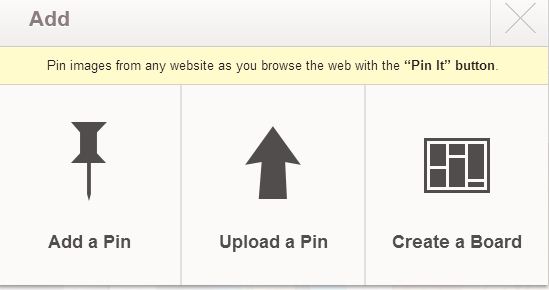
You can also use scrivener, but I find pinterest quick and easy to use. There is a plethora of images already posted by others which you can search for, or you can pin your own images from any website by pasting the url, or add your own file.

pin

Why and how does this help?

Some writers use prompts or music to help them to write. Jane Friedman has written a good article on prompts and Roz Morris has a blog about how writers use music to build their stories. If you are a visual person a collection of images can spark new ideas or link a character’s responses to his or her environment. It can help to put you in the scene and to think about how the characters will respond to a cliff edge, or a towering building, or a dark room.

According to neurolearning, ‘brainstorming activities of visual thinkers may be more productive if right hemispheric strategies of brainstorming and organization (mindmapping, doodling, free association, analogies) are undertaken. In fiction writing, often the most powerful writers are good at plumbing the strengths of both the right and left hemispheres.’ As a qualified teacher I can attest to the fact that children who are visual thinkers and learners engage more readily when the right side of their brain is stimulated with images and free drawing and mapping. You might be interested to know that most writers are in fact right brained, they use the right side of their brain to engage creativity more than the left side.

I would encourage you to have a look at pinterest and try pinning some images. I also have a board with writing quotes and information and boards with portraits and travel, which help to get the ideas flowing. Let me know if you have any other ideas for visual inspiration.

What I Learned In 2012 About A Book Release, Time Management, and Keeping Your Head (in the words of Kipling).

A very HAPPY NEW YEAR to all of you and every blessing for 2013.

I thought I would kick off the year with a look back at what I have learned through the process of writing, editing, publishing and marketing my book. Thank you to those of you who have downloaded or ordered a copy. I look forward to reading many of your books this year as I am planning to spend more time reading…hurrah! (and writing short stories).

Here is what I have learned through the process of a book release:

Don’t Sweat The Small Things – Yes, this is a cliché and a badly structured phrase but it is true. Don’t worry about the small things – whether or not everybody will like your book (they won’t, no one book inspires all readers), whether it will become a best seller (the chances are slim, it is more important that you gain readers who want to read more of your work), or whether you will be given good reviews (again, not everyone will engage with your voice/style). You can only write to the best of your ability and keep learning the craft of writing.

Stick to a Daily Writing/Work Schedule At All Costs – Your writing may be a passion but it is probably also your job, so you need to treat it as one and stay at your desk, or wherever you are comfortable writing, for a set period of time each day. It may be in your free time if you are studying, after work or early in the morning if you have a full-time job, small children, or other commitments, or all morning or all day if you have the luxury of time on your side. I have sat down at 8.30/9 a.m almost every weekday morning since I began writing in 2007 and I treat my writing with the same commitment that I did teaching a class of 35 children. They are entirely different experiences but it is easy to let writing slip when you have no pay cheque, schedule or boss on your heels. Take your writing time seriously.

Remember That Your Friends And Family Will Still Be There When you Resurface – Writing can be an isolating pursuit, and even more so for those of your who are extroverts. In the final stages of preparing your work it can be difficult to keep up with birthday cards (I just about managed to remember them all, and Christmas!), the phone calls you didn’t quite make, the social life that might have dwindled. Those who care about you will still be there when your head resurfaces and you exhale, ‘I did it!’ It is all right to hide away when the rubber hits the road and you need to stay up late to keep editing and keep working, when you say, ‘no’ to invites and events. You need to prioritise your writing in order to get it finished. A half written book is an unread book. It is really hard work and requires all of the dedication you can muster. Getting through the first draft alone can sap your creative juices but there is so much more required when it comes to editing your work.

Don’t Spread Your Time Across Too Many Platforms – Faced with the plethora of internet options it is easy to feel overwhelmed by them all. You can use a blog, email, twitter, facebook, google +, linkedin, tumblr, stumbleupon, pinterest. Help!! And there are more. The best advice I can give, having tried many of these, is to find the ones which suit your personality and the ones which generate the most engagement and then focus on these. I would recommend two or three.

Value Your Blog Readers – Your blog readers deserve to be  appreciated and valued. They have agreed to let you into their email inbox each time you create a post. This can be invasive and many people are face with far too many emails already. Don’t abuse their trust by posting half-heartedly or by over posting. Most bloggers post between 1-5 times per week, some post each day, but more that that can be a source of irritation. I try to post once or twice a week. Take the time to research, think and plan what you write so that it is valuable. If people have taken the time to comment then be courteous and respond. A lack of response shows a lack of interest and the internet can be very impersonal if people don’t engage.

Engage With Other Writers – I have found twitter and blogs to be a good place to get to know others. It can be a great encouragement when someone asks how you are getting on, promotes your work, or answers questions. It is an unusual profession and  it is difficult to talk to non-writers about what you are doing and why. Writers, as I also found with teachers, are like-minded in many ways, they are deep thinkers and are generally inspiring and intelligent people. Engage, encourage and interact with them.

Write Guest Blog Posts – Long before your book is due to be released it can really help to increase your visibility if you offer to post on blogs which you read and enjoy. Ask a few bloggers politely and professionally if they would be happy to let you write a guest post. Choose a run of days, I chose three, and think about what might be an appropriate post for each individual blog. Elizabeth Craig from Mystery Writing is Murder asked me to post on ‘A Sense of Place’ as she knew that I loved travel. Coincidentally, I wrote my Geography dissertation on this subject some years ago. Chose your topic carefully and you will find that you meet people who comment on your posts and are interested in what you have to say. I will add here that I am really happy to accept guest posts.

Be Kind To Yourself – After a few years of writing solidly on one project you need to come up for air, breathe, take stock and relax before you begin again. I plan to write many more novels but I want to focus, as you know, on short story writing and on reading more of a range of fiction and other short stories. A novel is a wonderful thing but it is hard work and can be exhausting if your time is already squeezed. Enjoy the reviews and the feedback, you have worked hard.

Let me know about your experiences with book releases and what you have learned from them. I look forward to hearing from you.

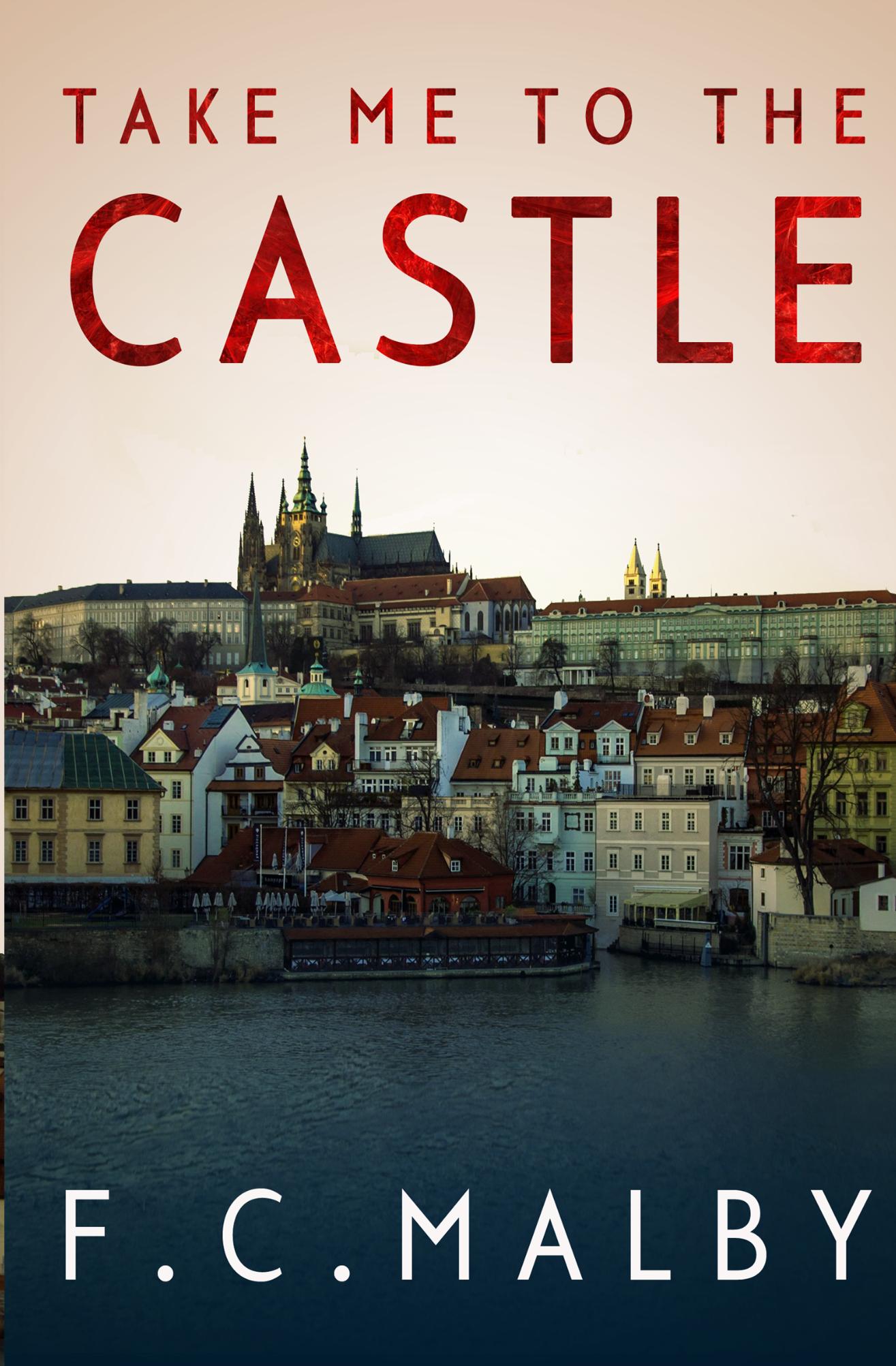
Book Release: ‘Take Me to the Castle’ by F.C. Malby

Image

Today is the release of my debut novel, ‘Take Me to the Castle.’ You can buy it on Amazon in paperback and on kindle. It can also be ordered in bookstores from January 2013.

Thank you for following my blog so far and I am enjoying your comments and your own posts. I wanted to let you know that I will be guest posting on some other writing blogs over the next few days. It would be great see you over at:

http://mysterywritingismurder.blogspot.co.at/ hosted by Mystery writer, Elizabeth Span Craig. She blogs daily and her website was named by Writer’s Digest as one of the 101 Best Websites for Writers for 2010, 2011, and 2012 (19/12/12).

http://www.aliventures.com/ hosted by Ali Luke, author of ‘Publishing eBooks for Dummies’ and a writing coach. Ali is full of information on writing and publishing and is a well-respected blogger. (20/12/12)

http://www.30daybooks.com/blog/ hosted by Laura and Brandon, who post great articles on marketing and publishing. Laura has been featured on CNN and has just released ‘Fire Up Amazon.’ (21/12/12)

Do leave comments and join in with the discussions. I look forward to seeing you there.